Ray-Ban · Original Wayfarer RB2140 · Release date not yet confirmed
Choosing the Ray-Ban Original Wayfarer: 50 and 54 differ by more than 4 mm
No hands-on testing: written from published sources and edited photography. Product details checked 25 November 2026.
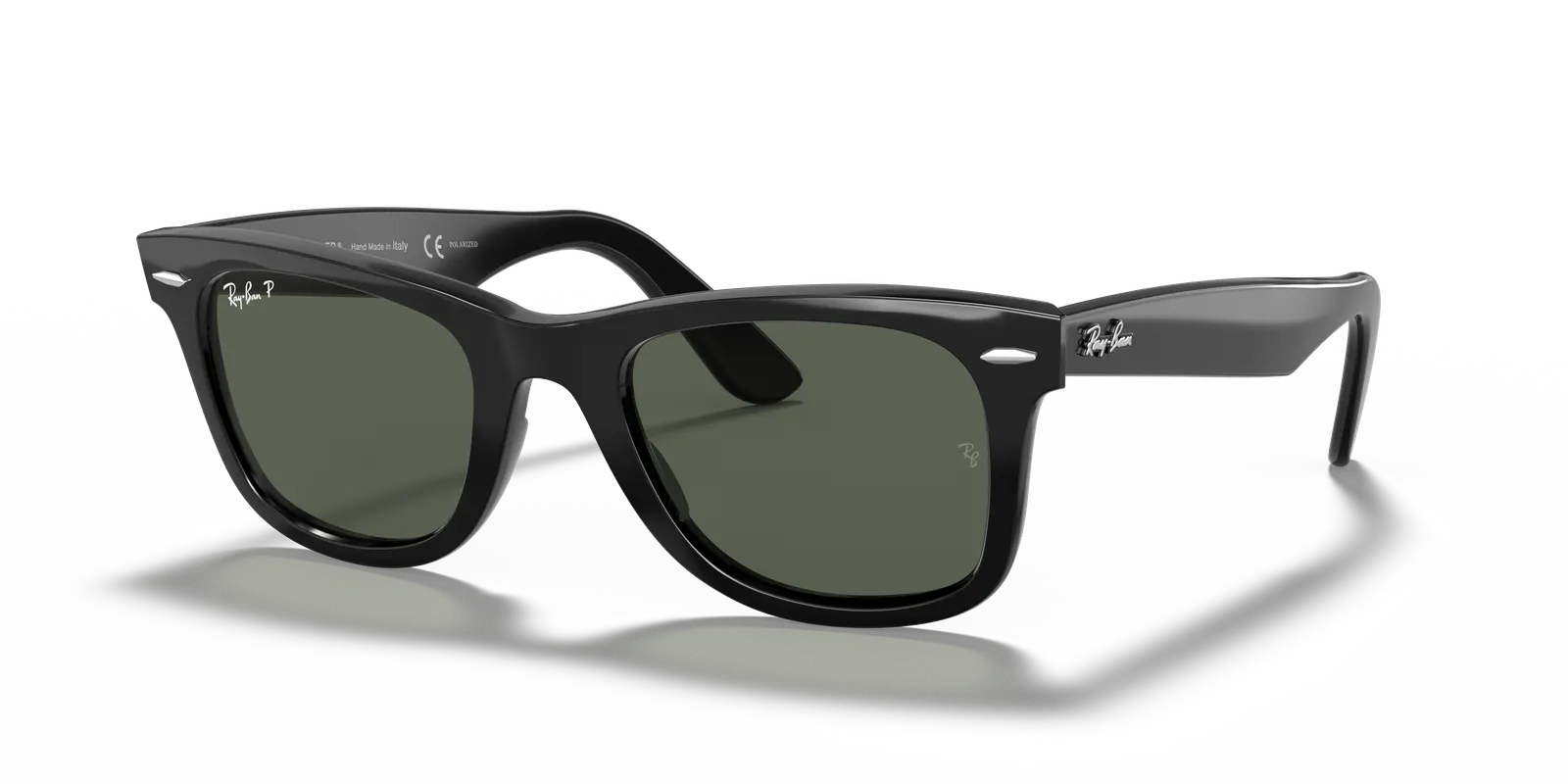
The Ray-Ban Original Wayfarer RB2140 suits anyone who likes a thick frame with a slight forward tilt. Choosing a size is not a matter of face width. The 50 and 54 differ in lens width, and the common bridge markings are 22 and 18 mm. Where the frame sits on your nose, how close it comes to your cheeks and how the temples press all need a try-on together.

This guide focuses on the standard RB2140, with the black G-15 901 and the green polarized 901/58 as spec examples. Start with the shape difference from the New Wayfarer RB2132, then work through size, contact points and lens function.
- The pair here
- Original Wayfarer RB2140
The New Wayfarer RB2132 is a different model
- Common markings
- 50-22 / 54-18
Read lens width and bridge, not overall frame width
- Lens choice
- Polarized and UV protection are separate
A darker tint is not a higher UV rating
Are the Original and New Wayfarer the same frame? What should you compare first?
They are different: the RB2140 is the Original Wayfarer and the RB2132 is the New Wayfarer. The original keeps a stronger thick frame and forward tilt; the new one uses a softer shape. Whether a frame touches your face or slides is still a question for your own head, not for the word New.
Official images of the two exact models
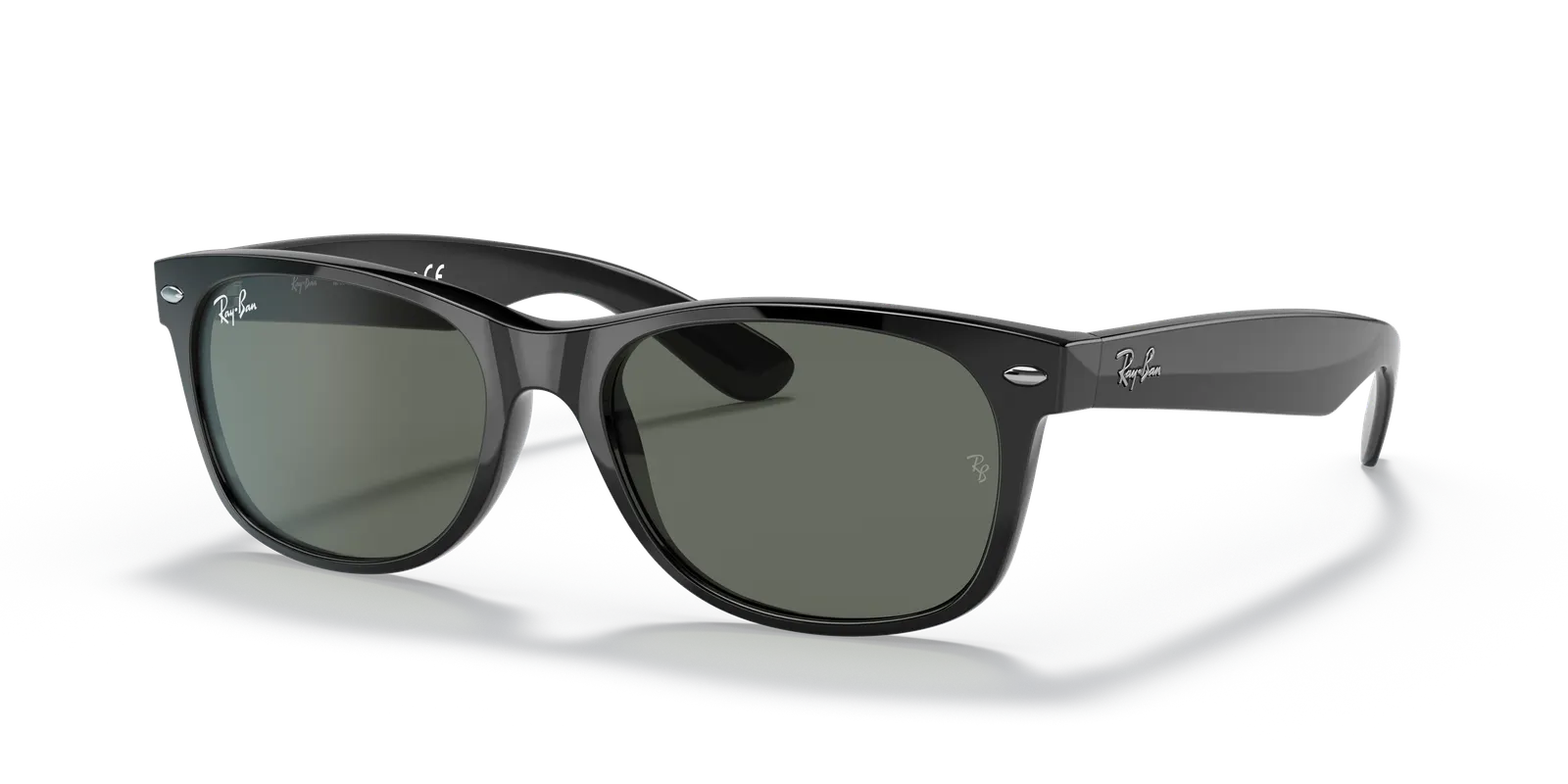
Similar three-quarter angles show the frame shape and the hinge. Different lenses and sizes, so do not measure proportion from these.
The Wayfarer design goes back to 1952, and the current RB2140 keeps a clear thick browline and rounded corners. The 901/58 spec here lists an acetate frame and glass green polarized lenses. Shape and materials are the starting point; how the frame sits on the nose and passes the ear still needs your own face.

Olivia wore the glasses with a lace dress over jeans and flat shoes, so the heavy frame added weight to soft clothes. That contrast is easy to borrow; a plain T-shirt can carry the black frame too.
Keep the full model number when buying. "Black Wayfarer" is not enough to separate the Original, the New and other versions. An old case, a product name or a similar-looking photo may not be the frame you want. If the heft of the RB2140 is what you like, stay with that model while fitting and checking the specs.
How do you choose between 50 and 54, and why can a bigger lens be less comfortable?
First check whether the frame stays put, whether the temples flare outward and whether the frame touches your cheeks when you smile. Then choose the size. The 50-22 and 54-18 change the relationship between lens and bridge; one is not the other scaled up. A larger lens also does not fix a low bridge, cheek contact or pressure behind the ears.
Product images of the Original Wayfarer 50 and 54
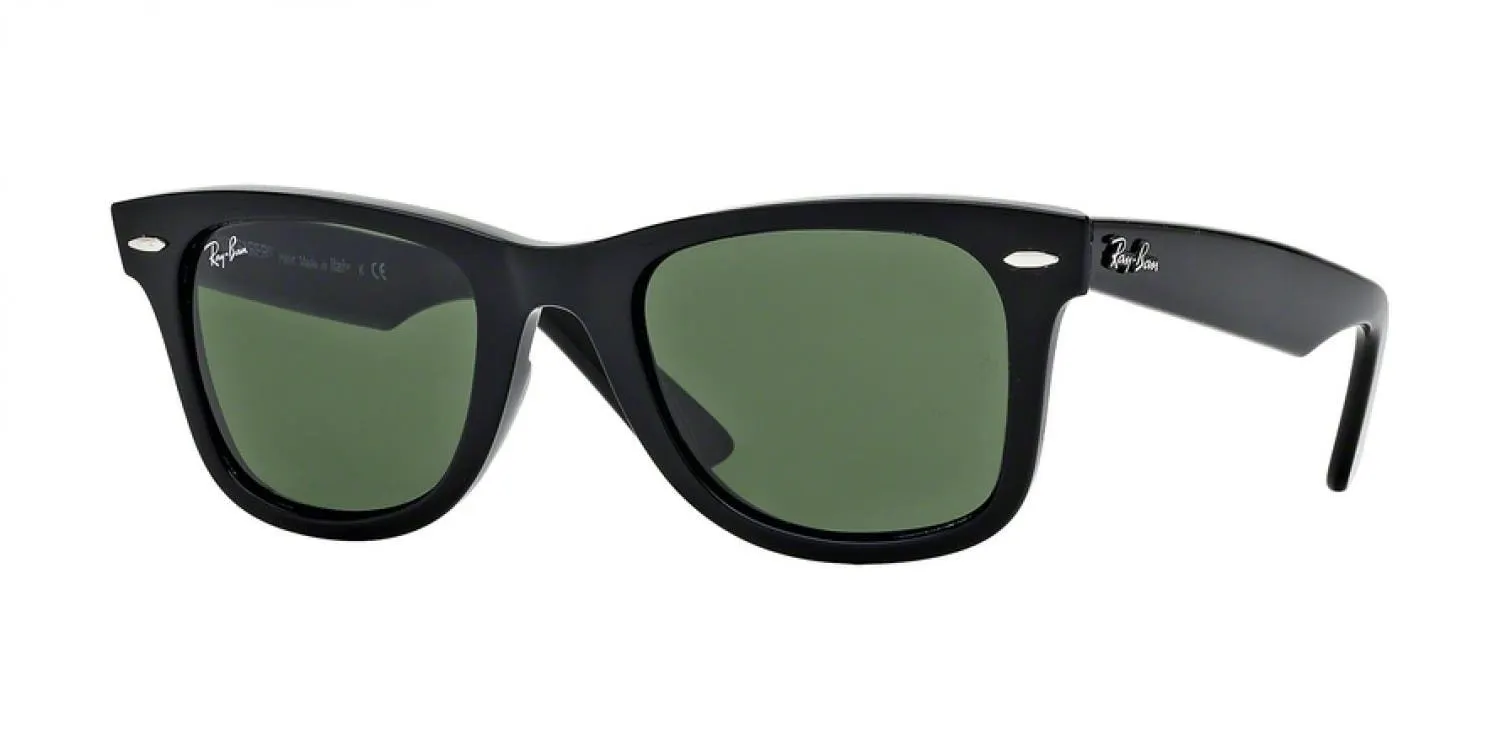
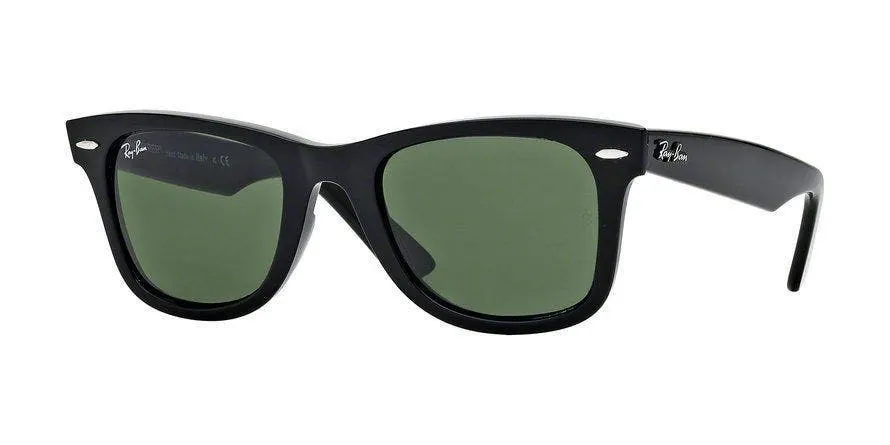
The retailer's images for each size, not laid out to scale. Lens material and polarization differ by version.
Common RB2140 markings, in millimetres
| Marking | Single lens width | Bridge marking |
|---|---|---|
| 50-22 | 50 | 22 |
| 54-18 | 54 | 18 |
Frame markings, not overall frame width or a face-width recommendation. The listing and the temple engraving should agree.
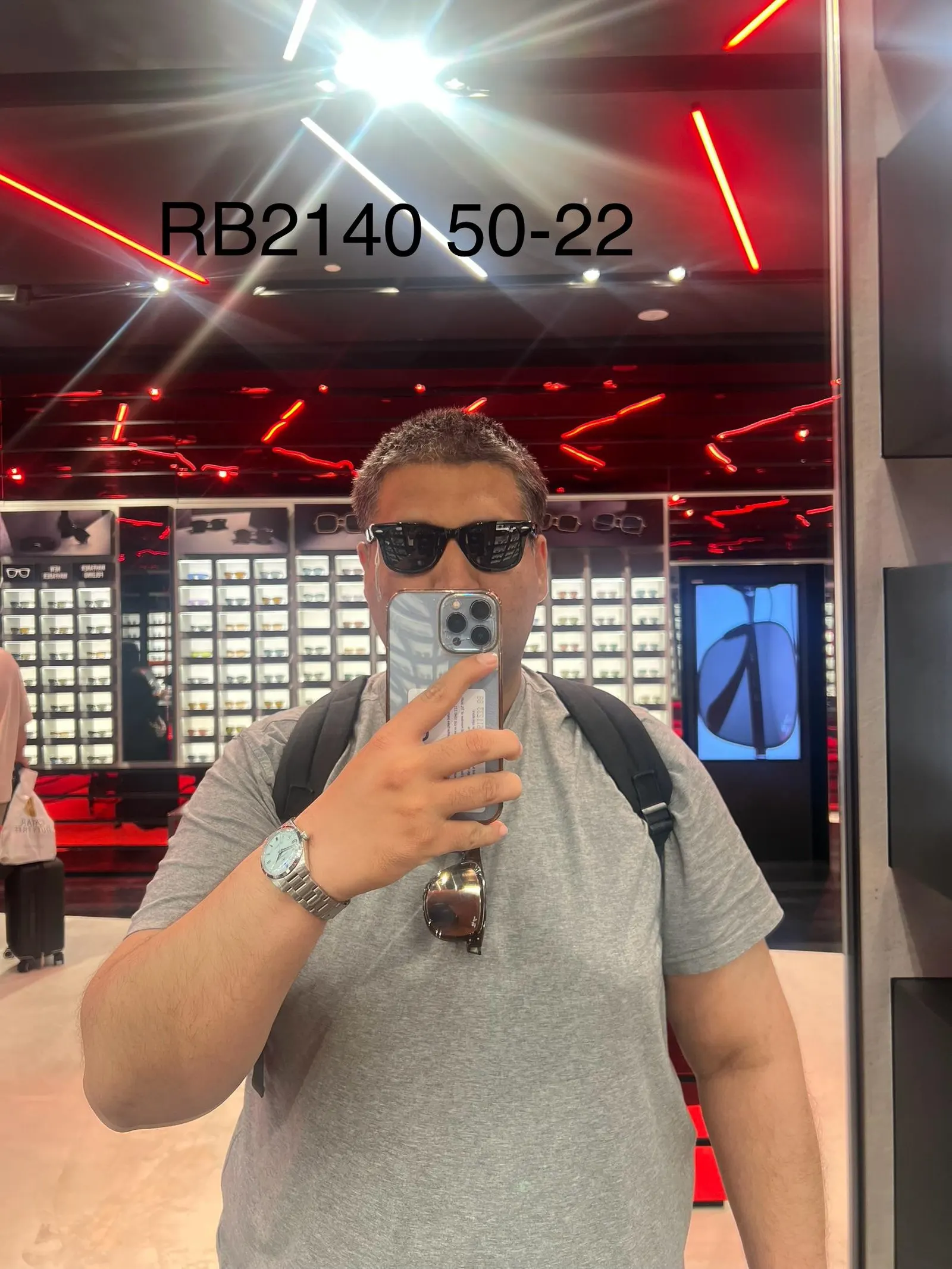
That reader had assumed he needed something over 56 mm, tried the 50-22, liked it, and asked whether he should still move to the 54. On the other side, the owner at the top of the page, who has worn his for years, found the temple position cramped and worried that the 50 already sat close to his cheeks. Liking the look of the 50 and needing to solve cheek contact can happen at once.
Read the numbers on the temple separately: 50 or 54 is the width of one lens, 22 or 18 is the bridge, and the following 150 is the temple length, all in millimetres. They are not the width of the whole frame. A comfortable pair you own makes a useful reference, but across models look at frame height, nose pad shape and angle too.
Low bridge, cheeks when smiling, tight temples: will a bigger size fix it?
Sometimes not. Put the glasses where you normally wear them, lower your head, turn, smile, and check for sliding, pressure on the nose, lashes against the lens and contact with the cheeks. If the lenses look large enough but you keep pushing the frame up, the fit is still wrong. A different pad design or a professional adjustment can matter more than lens width.
Do not order from labels such as "Asian fit" or "round face". If your nose bridge is low or your cheeks sit close to the frame, nose contact and cheek clearance deserve a real try-on; that does not mean everyone needs the same fit version. With clear pinching, slipping or an uneven frame, ask someone who adjusts glasses. Do not bend the frame with heat and force into a wearable shape.
G-15, polarized, or simply a darker lens: how do you choose?
Check the UV label first, then decide about polarization from the glare you meet and the screens you use, and choose a colour last. G-15 is a lens tint. Polarization reduces specific reflected glare. A dark tint that hides your eyes is not a higher level of UV protection.
Standard G-15 and the green polarized version
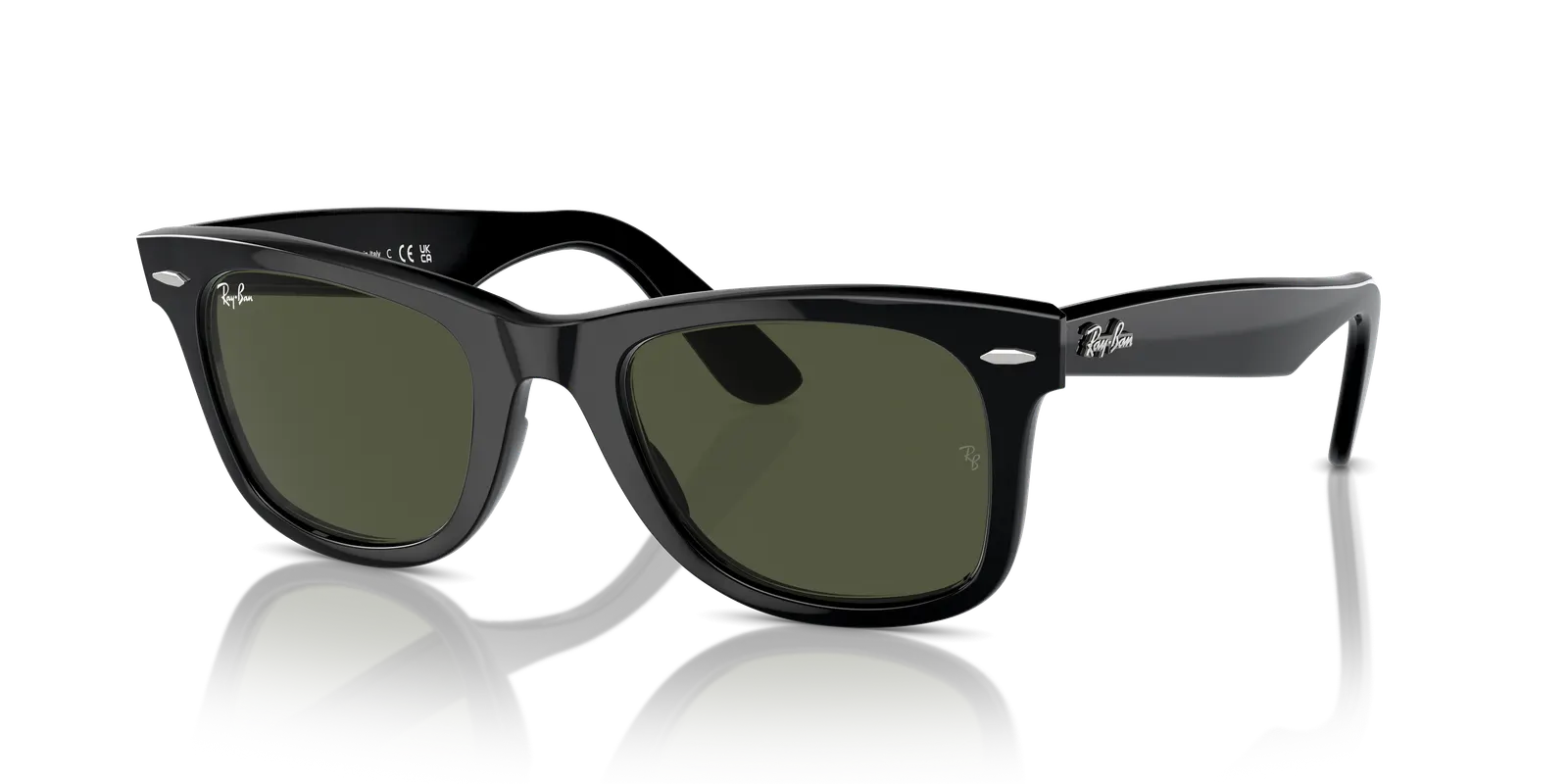
The two look similar. A product photo cannot demonstrate polarization; choose from the lens code and the label.
A 2026 RB2140 buyer wanted the darkest lens so others could not see his eyes, and weighed Classic Dark Grey against G-15. How much eye shows also depends on the light, the angle and the lens build. Looking dark in a selfie does not mean full concealment in every situation. Do not treat a darker lens as a higher safety rating.
The American Academy of Ophthalmology suggests choosing sunglasses labelled 100% UV protection or 400 nm, and states that lens darkness does not determine UV protection. It also separates polarization from UV: cutting reflected glare from water and roads is useful, and UV still depends on the label.
Polarization has trade-offs. The Academy's note on polarized lenses mentions that some screens, dashboards and phones become harder to read, and that spotting ice and driving at night have limits. Bring your own phone to the fitting and check it at different angles. Everyday sunglasses are still not sports goggles or protection for extreme light.
Do they work with a plain T-shirt, and why try them indoors and out?
Yes. The heavy black frame is already the focus near your face, so a plain T-shirt, shirt or jeans are easy. Watch how the frame sits and presses during the fitting. A few minutes of turning your head often reveals pressure that a mirror glance misses.
A dark T-shirt meets the black frame, and the rest of the outfit stays simple. For a quieter effect, start with dark tops you already own; to make the glasses more obvious, use a pale background. Style advice should not be limited by claims about face shapes, and comfort should not be waved away for the look.
Indoors, look beyond the front view: are the temples pushed outward, do the lashes touch the lens, does anything hurt after you take them off? For a prescription pair, let the optician work with the actual lenses and measurements. The experience of a non-prescription display pair does not automatically transfer.
Whitening frames and scratched lenses: replace them, or clean them properly?
Separate surface dirt, frame scratches and lens damage before deciding on cleaning or repair. Ray-Ban suggests a soft microfibre cloth, a suitable mild cleaner or a lens spray, and storing the glasses in a case. Do not follow online advice to polish lenses with car abrasive or toothpaste.
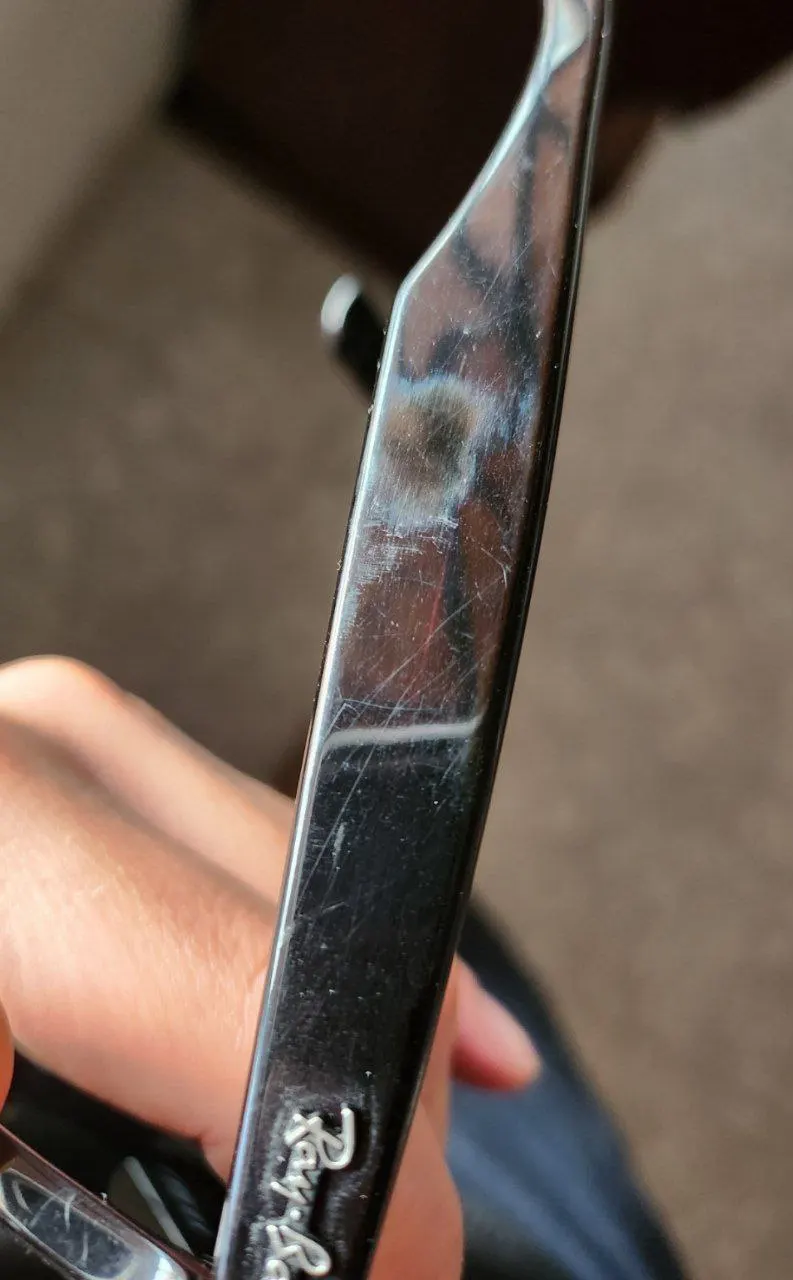
That buyer liked the classic black frame and glass lenses but was unhappy with the surface after two years. Replies included owners whose glasses still looked good. Watch the temple and hinge area when you wipe the frame; the cause of the pale marks in the photo should be judged by an optician looking at the glasses.
Blow off loose dust before wiping so grit does not drag across the surface. With a crack, a chipped lens, affected vision or a loose hinge, take the glasses to a reliable optician. Cleaning does not repair every scratch, and saving the cost of a lens is not worth ignoring safety.
Ray-Ban's care page also suggests putting glasses on and taking them off with both hands, not leaving them on top of your head where they bend, and gives a storage temperature range for dry conditions. Do not leave them in a hot car, and keep them in a case so keys do not scratch them.
What do they cost now, and which specs should you keep?
On 25 November 2026 the US retailer Designer Optics listed the RB2140 901/58, black frame with green polarized lenses, at US$170.80 in both 50 and 54. That is one retailer's price, not the Ray-Ban US price; non-prescription, prescription, lens options and other regions differ.
Start with the Ray-Ban US page for the 50-22 green polarized version to confirm the model, then check the chosen configuration on the retail page used for the price. Record RB2140, the colour and lens code, the size and the after-sales terms. Do not decide from a low headline price.
With secondhand or resale purchases, temple text and packaging help identify the claimed configuration but cannot authenticate from one logo photo. Choose sellers who can explain the source and offer clear returns and fitting support. If the glasses do not match the spec you chose, check that first rather than bending the temples or swapping lenses.
You can also watch SportRx's comparison of the Original Wayfarer 50 and 54.