Birkenstock · Boston · 1976
Birkenstock Boston: choosing the footbed, the size and the upper
Compiled from brand material, public owner discussions and press coverage, not from the author's own wear test. Details checked on 24 November 2026 (Shanghai time). Photos and experiences are attributed; they describe one person's shoe at one moment.
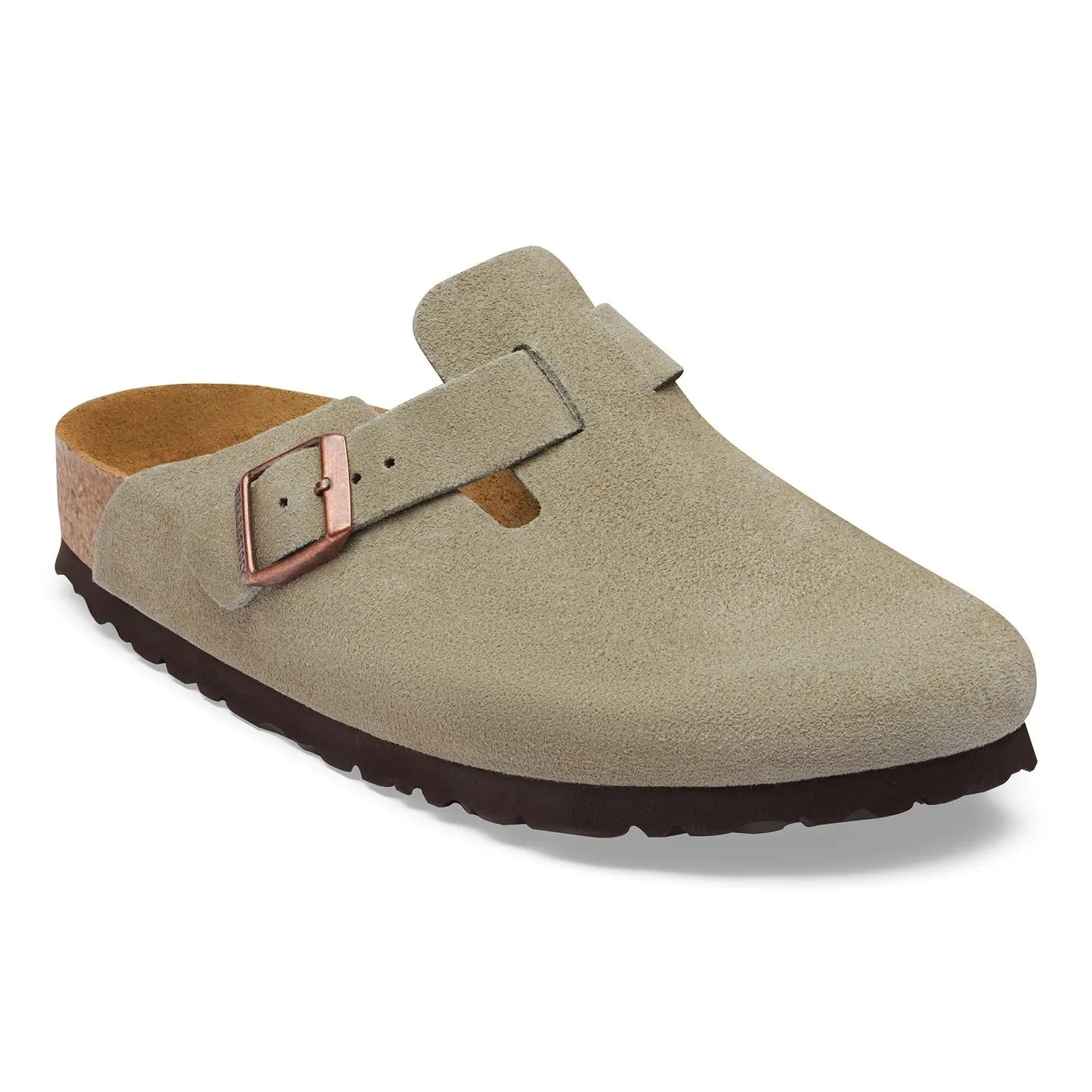
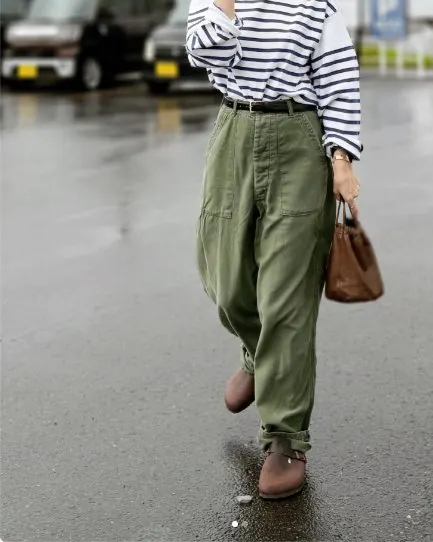
The Boston is Birkenstock's closed-toe clog: a single upper over the foot, one strap with a metal pin buckle, a cork-latex footbed and a light EVA sole. It looks like a shoe you can step into and go. What decides comfort is usually which footbed you chose, which upper, and whether the length and width match your feet.
It came out in 1976, called Kork-Clog in the German catalogue, and took the name Boston in 1979. In recent street photos and owner threads it is both a daily shoe worn with trousers and socks and a shoe that starts long discussions about footbeds, break-in and heel slip.
If you like a slip-on closed toe and are willing to find the right footbed and width, the Boston is worth a try. If you want a shoe that is soft from the first step and holds the heel firmly, check in the fitting whether both can happen.
- Launched
- 1976
The US site still calls it the first closed-toe model of that year; it was named Boston in 1979
- Construction
- A closed-toe clog
One adjustable strap, no heel strap; cork-latex footbed and EVA sole
- Footbed
- Classic or soft
The soft version adds a layer of latex foam under the same contours
- Width
- Regular or Narrow
The brand says Narrow suits most women's feet; do not add length to fix width
What is the Boston, and how does it differ from the Arizona sandal?
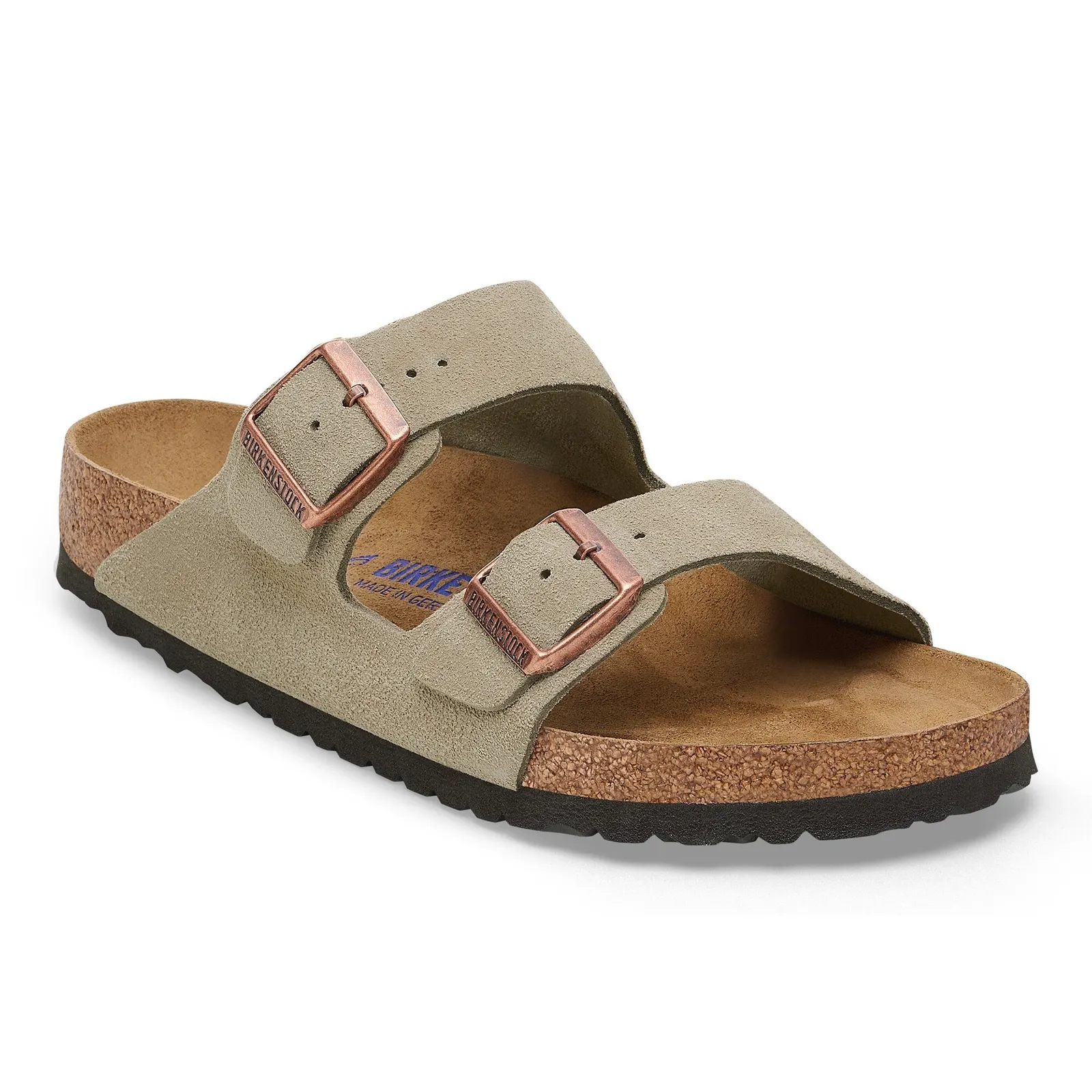
The Boston is a closed-toe clog with an open heel and one strap with a metal buckle across the instep. The Arizona is an open-toe sandal with two buckles. The covered toe suits people who show less of their feet or want a warmer shoe, but the heel stays open. How well it stays on depends on the footbed, the strap tension and the stiffness of the upper.
Construction A
Construction B
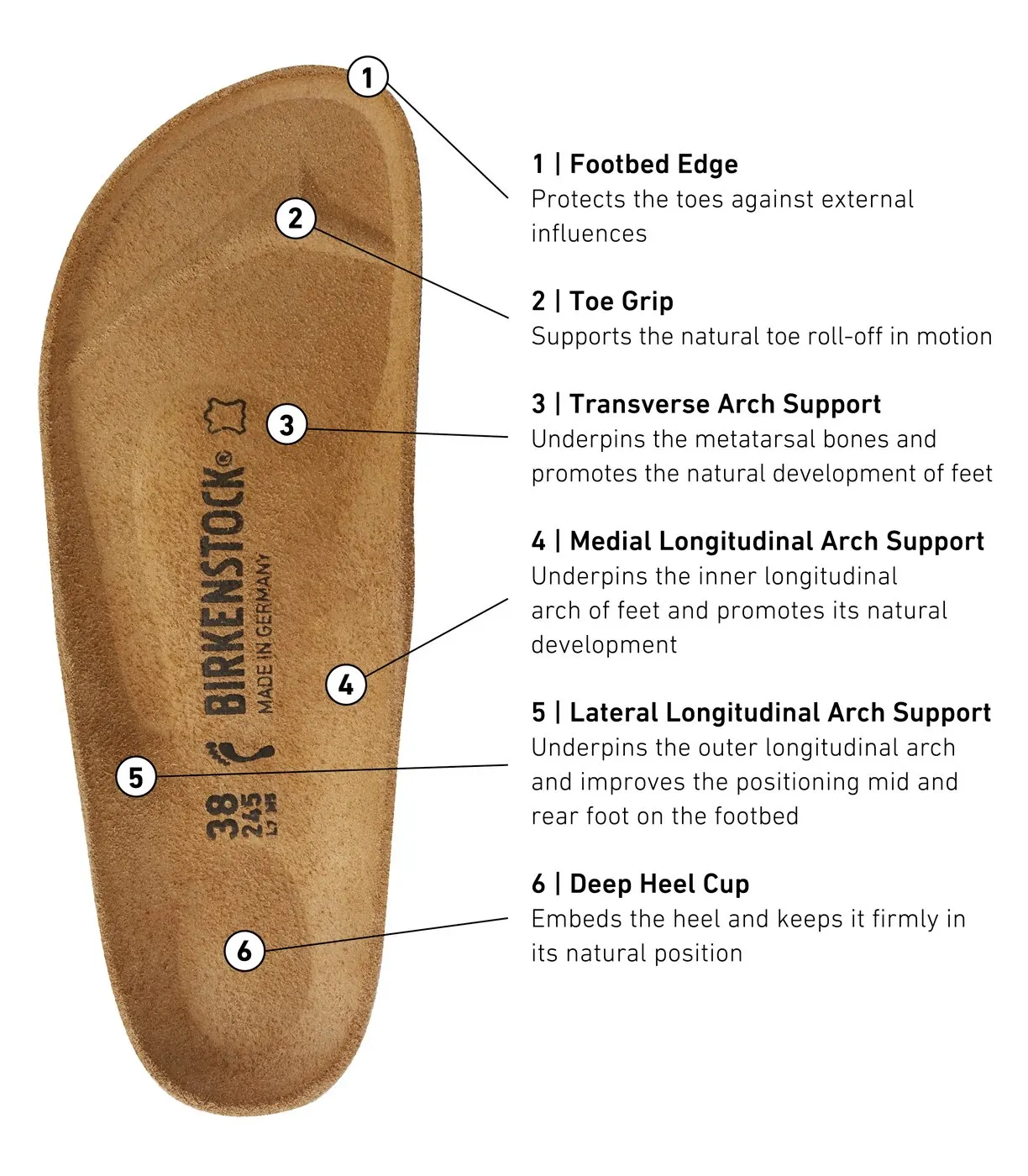
The brand describes its cork-latex footbed with a deep heel cup, inner and outer longitudinal arch support, a transverse arch and a toe bar, with the front edge slightly raised. Those contours are exactly what to feel for during a fitting.
Unlike a closed trainer, the Boston has no upper around the heel. The easy step-in comes with a different way of holding the foot when you lift it.
The standard pair here is made in Germany with a cork footbed and an EVA sole, in uppers including suede and oiled leather, with a classic or soft footbed. Woven straps, shearling linings and the fully covered Exquisite footbed are separate builds and prices, so read the full product name.
On 25 March 2025 Reddit user redditor36 tried a new pair at home with cuffed jeans and white socks.

Classic or soft footbed, and is pressure something to break in?
The soft footbed adds a layer of latex foam under the lining while keeping the classic contours, so it is usually easier to get used to. The classic version feels firmer and more supportive at first. With clear pressure, toes against the edge or the foot floating inside, check the size, the width and where the footbed sits before calling it break-in.
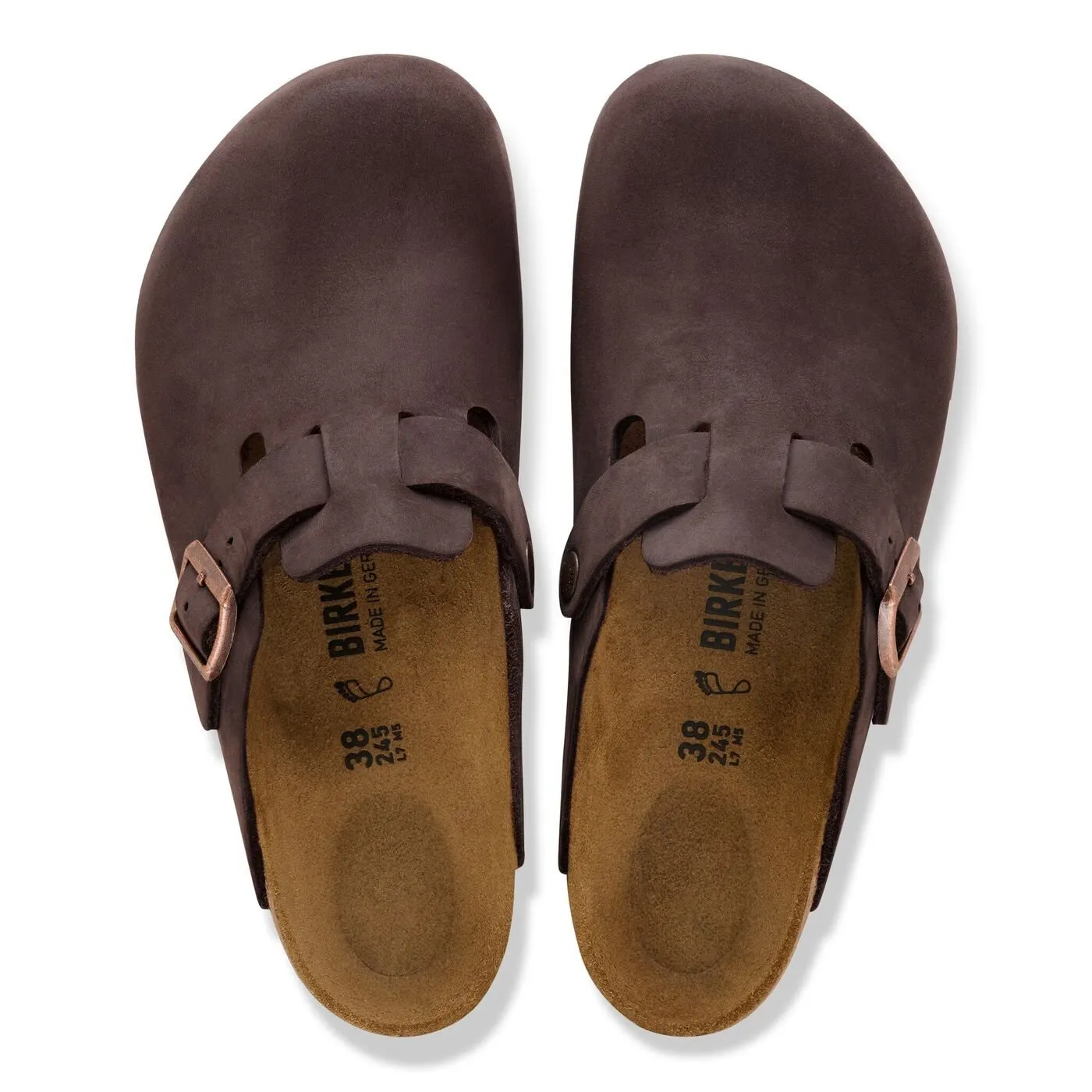
The classic Original footbed sandwiches a cork-latex core between two layers of jute, with a suede lining. The brand says it adapts with wear. The Australian site's footbed guide also notes that the soft footbed can feel slightly tight before it adapts and holds more heat. Read the product name and the insole: classic versions commonly use a black logo, soft ones a blue logo and the words Soft Footbed, and a hollow footprint means Regular.
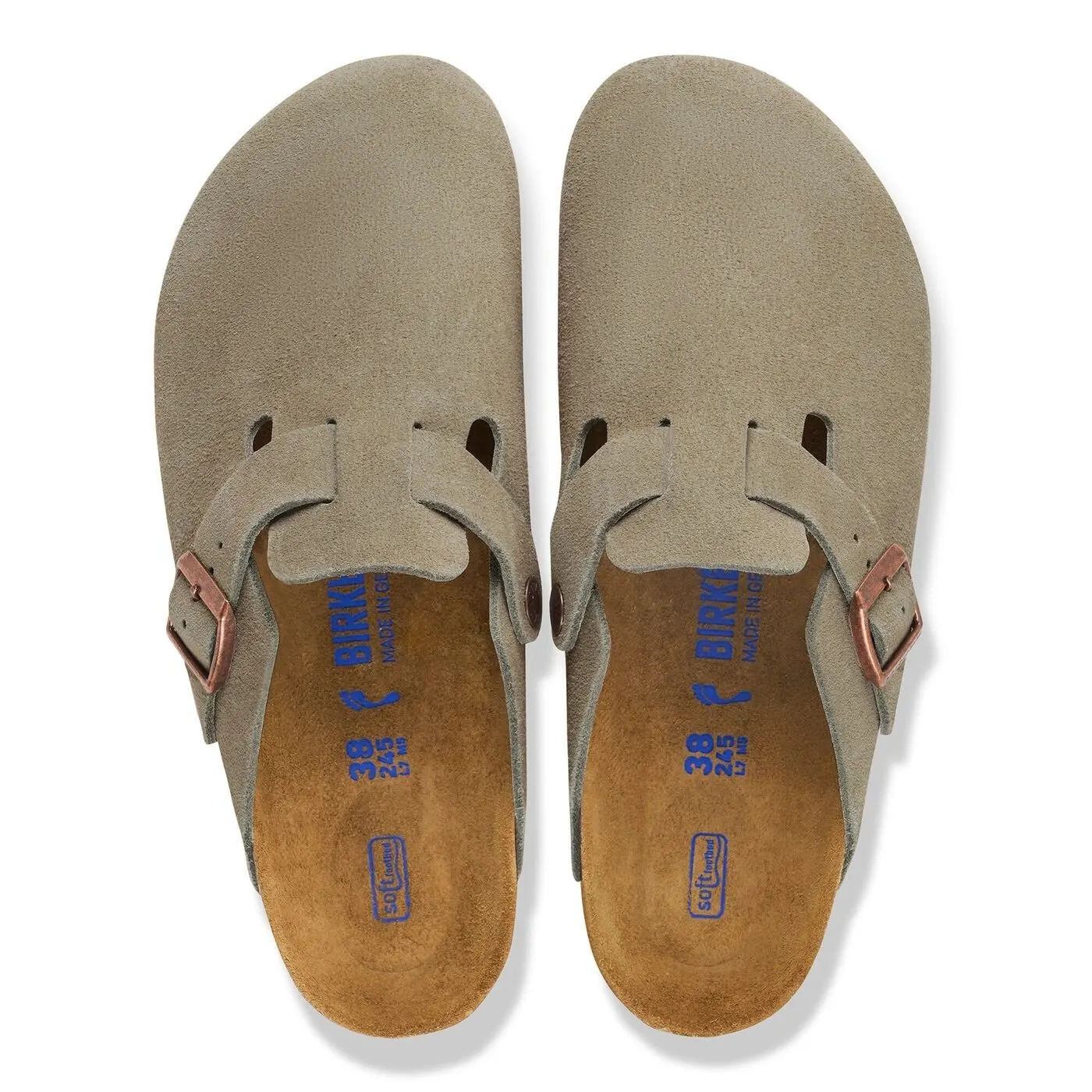
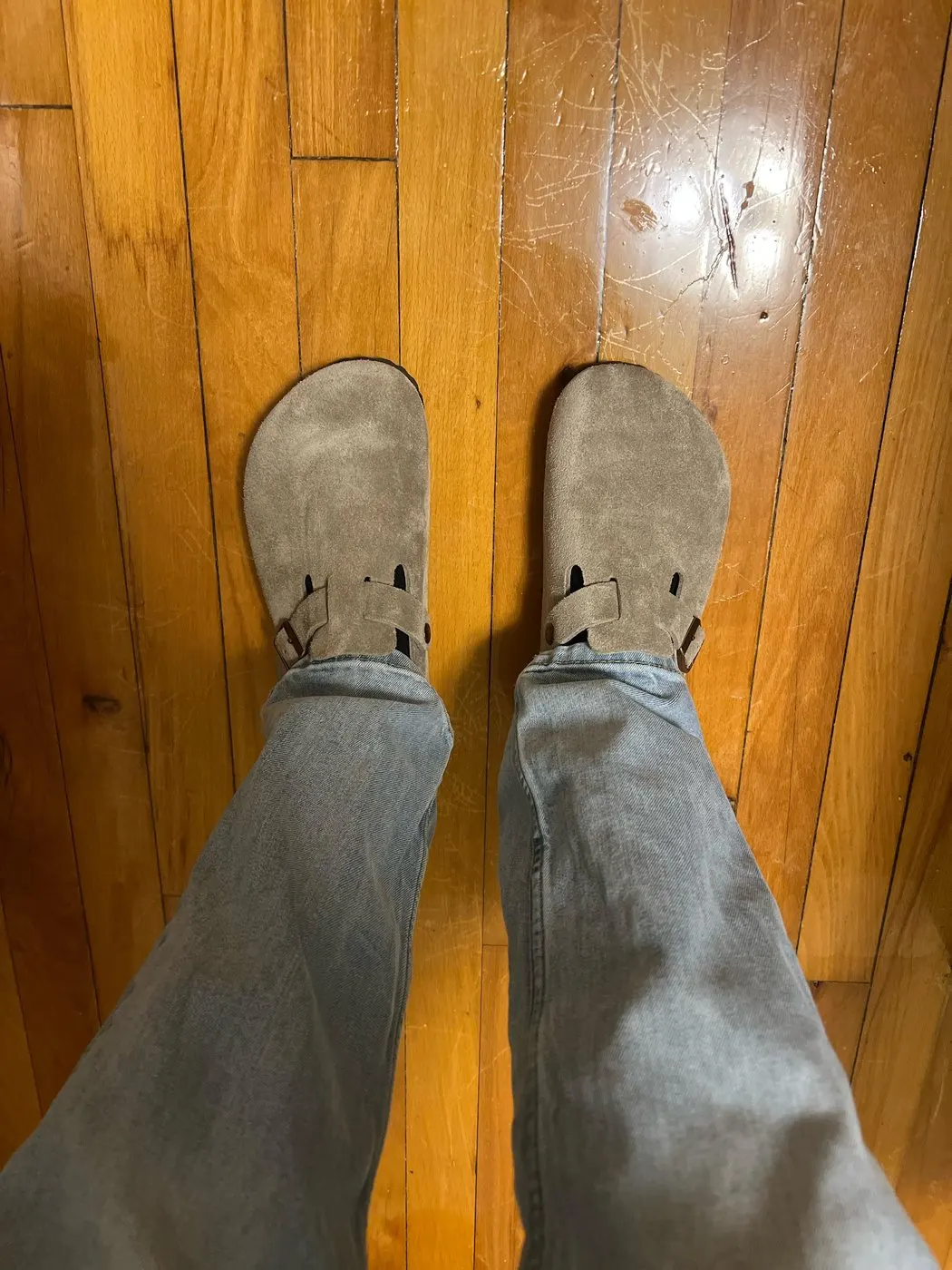
On 27 March 2025 Birkenstock_Clogs1 posted a top-down photo of a pale Boston with pale jeans.
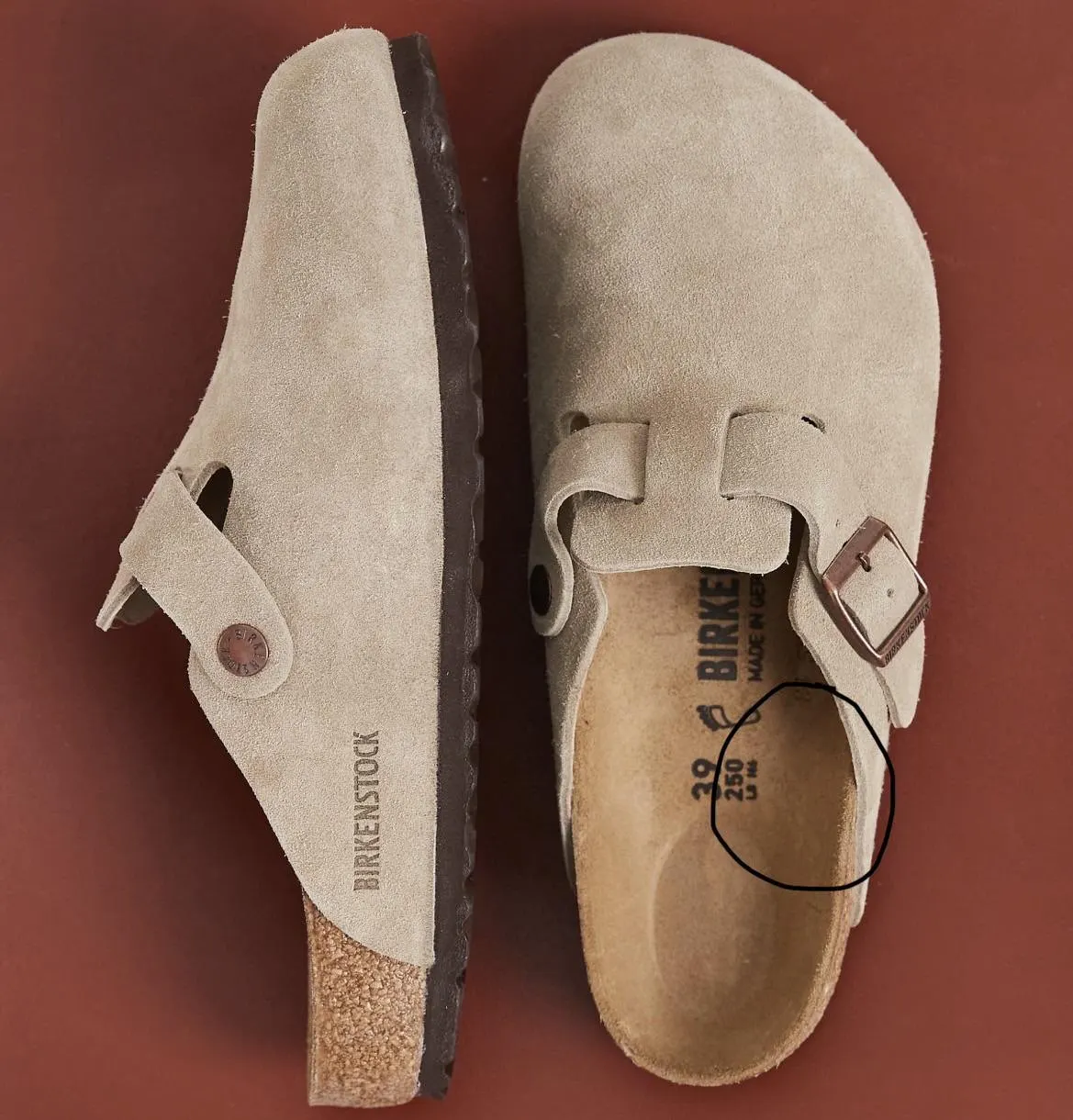
The arches and toe bar are where many new wearers feel the shoe most. On 19 July 2026 Reddit user Lordic_9 wrote that a new pair worn only at home for a few days pressed at the outer arch, more on the left foot. The poster believed the size was right but did not know whether to keep breaking in or return them. Replies suggested a few more hours would soften the footbed, or wearing socks for now. User -Snowtree- separated the two footbeds: a soft footbed needs almost no break-in, while a classic one is hard for many first-time wearers, with an adaptation period from weeks to months.
Others do not read it as insufficient break-in. On 28 May 2026 user strawberrygreenteaa said two summers of school, errands and work had made the pair more comfortable than new, and she liked the look and the usefulness, but they never became as soft as others described; two days of city walking still hurt. Replies suggested the length or width was wrong rather than the break-in incomplete. The brand's own advice is to flex the footbed, leave the strap loose at first, and wear the pair for one to two hours at home. Add time gradually, with about a quarter of an inch of room around the foot and the toes off the footbed edge. Clear pressure or a floating foot should not be left to time.
Suede or oiled leather, and which is easier to put on?
Suede is soft and napped, can collapse, and may need a hand to open it when you put it on. Oiled leather usually keeps more shape but creases and darkens into a patina. For the soft look, try suede. If you want the upper to stand up and go on cleanly, compare oiled leather, then test heel hold and rubbing on their own.
Upper A
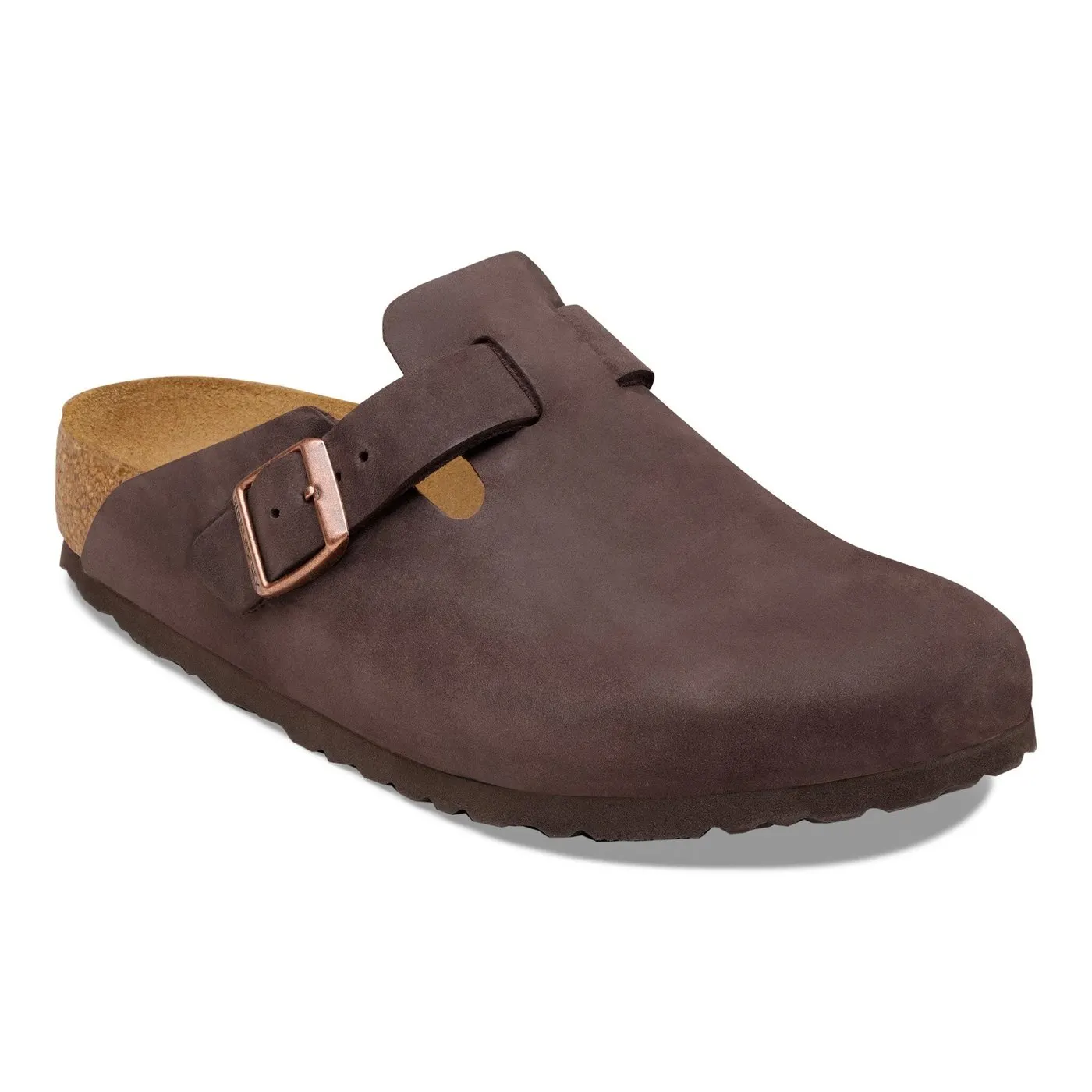
The brand describes suede as a split leather with a nap that absorbs moisture well, with stability that varies by hide. Oiled leather has a waxy surface that may already be uneven in colour.
In a discussion about the suede Boston, one owner liked the look and the easy pairing but disliked that the soft suede collapsed and had to be opened by hand each time. The heel also felt loose when walking, and the poster wondered about the size and the upper. Those are two things to watch together in the fitting.
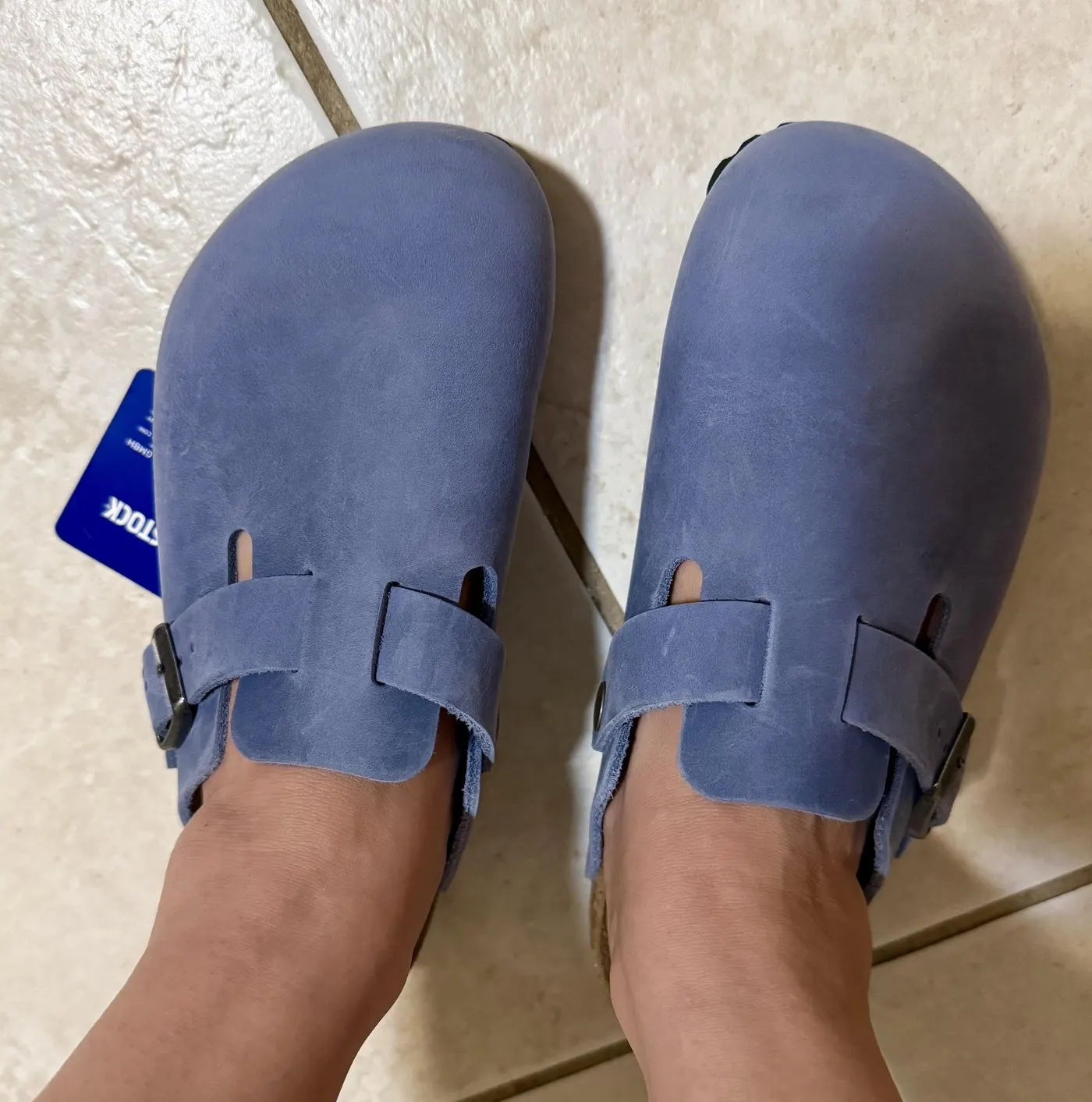
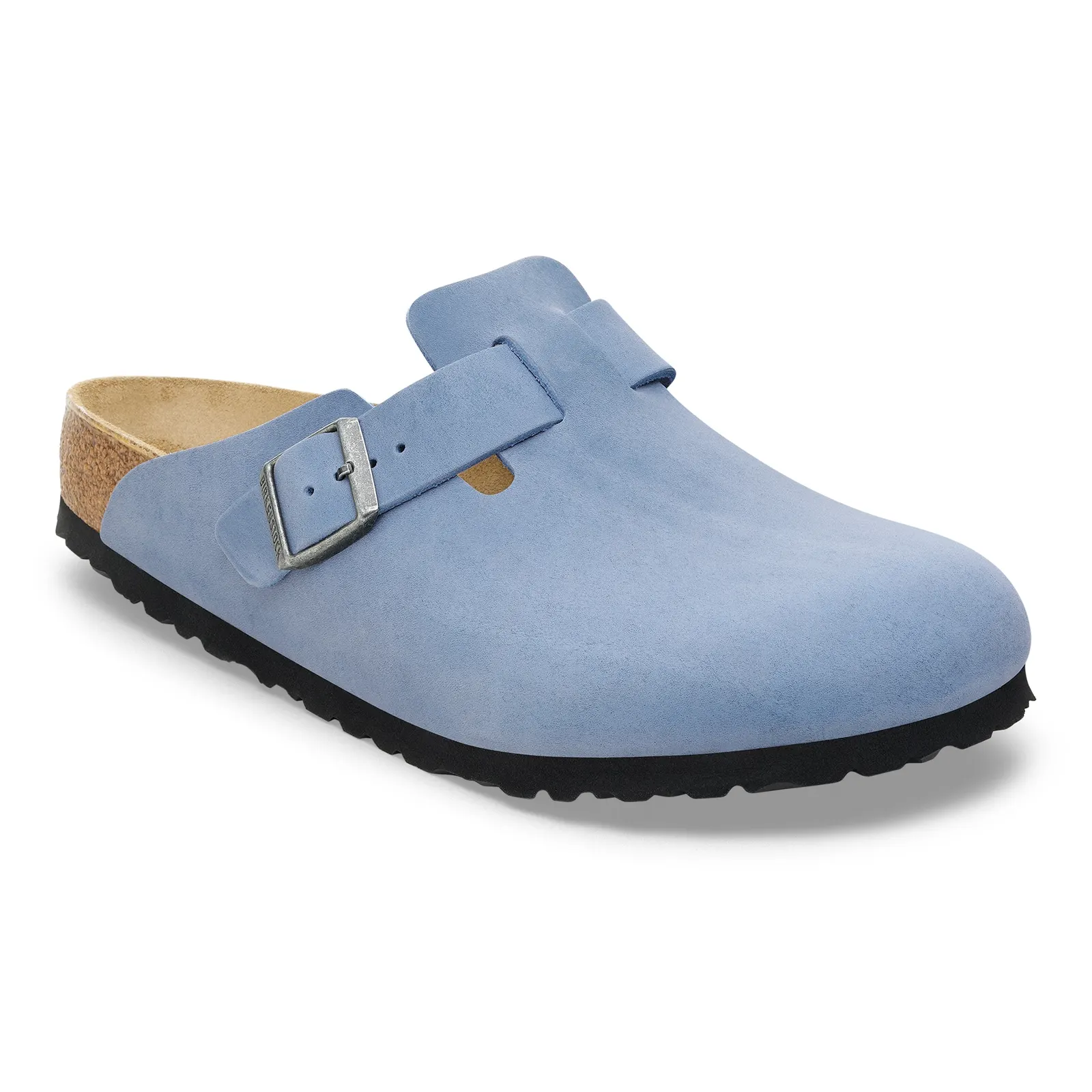
A buyer of a first oiled-leather Boston chose Elemental Blue in EU 37. In the photo, with the tag still on, the upper holds a fairly firm shape; the recorded price was US$98 plus tax, a discount at the time.
Some people wear both uppers. On 25 September 2026, in r/femalefashionadvice's thread on favourite shoes bought this year, notthelettuce's comment mentioned a cream textured-leather Boston and a black suede Boston, worn often for several months. Beyond the look, test whether you accept how each goes on.
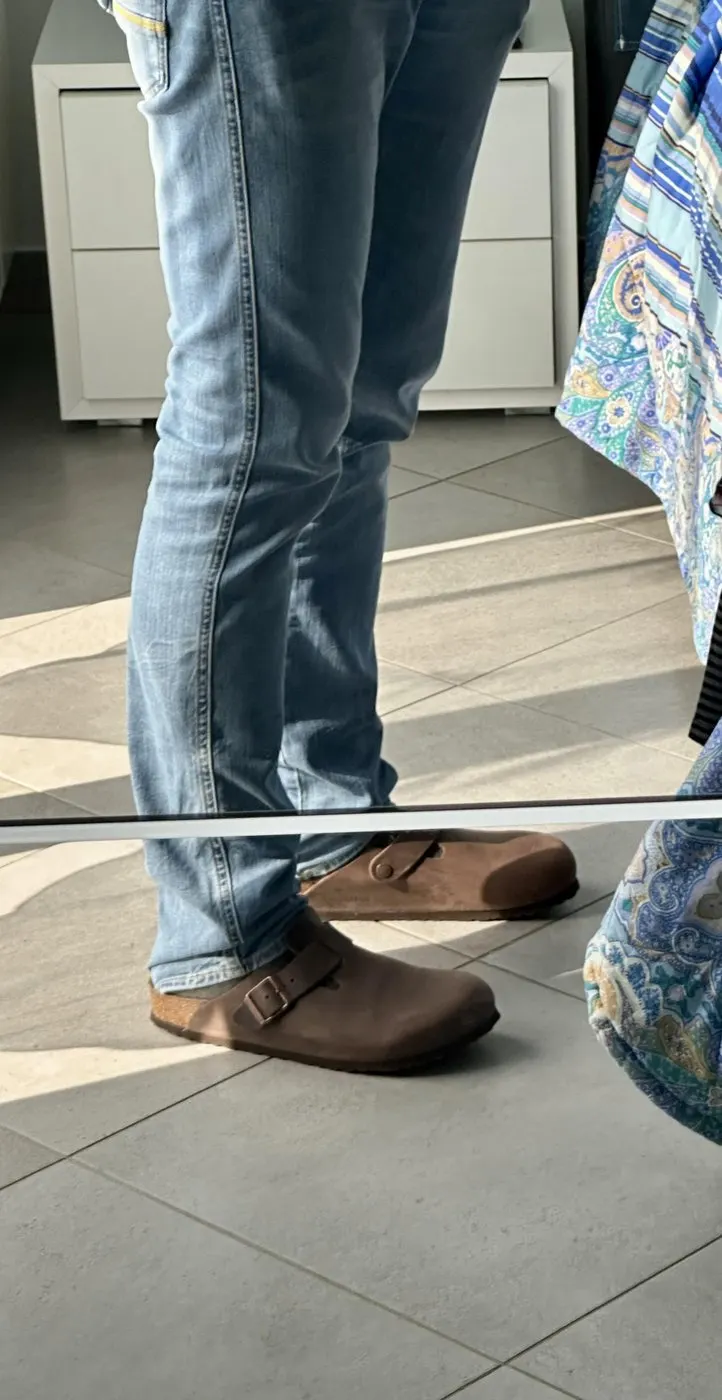
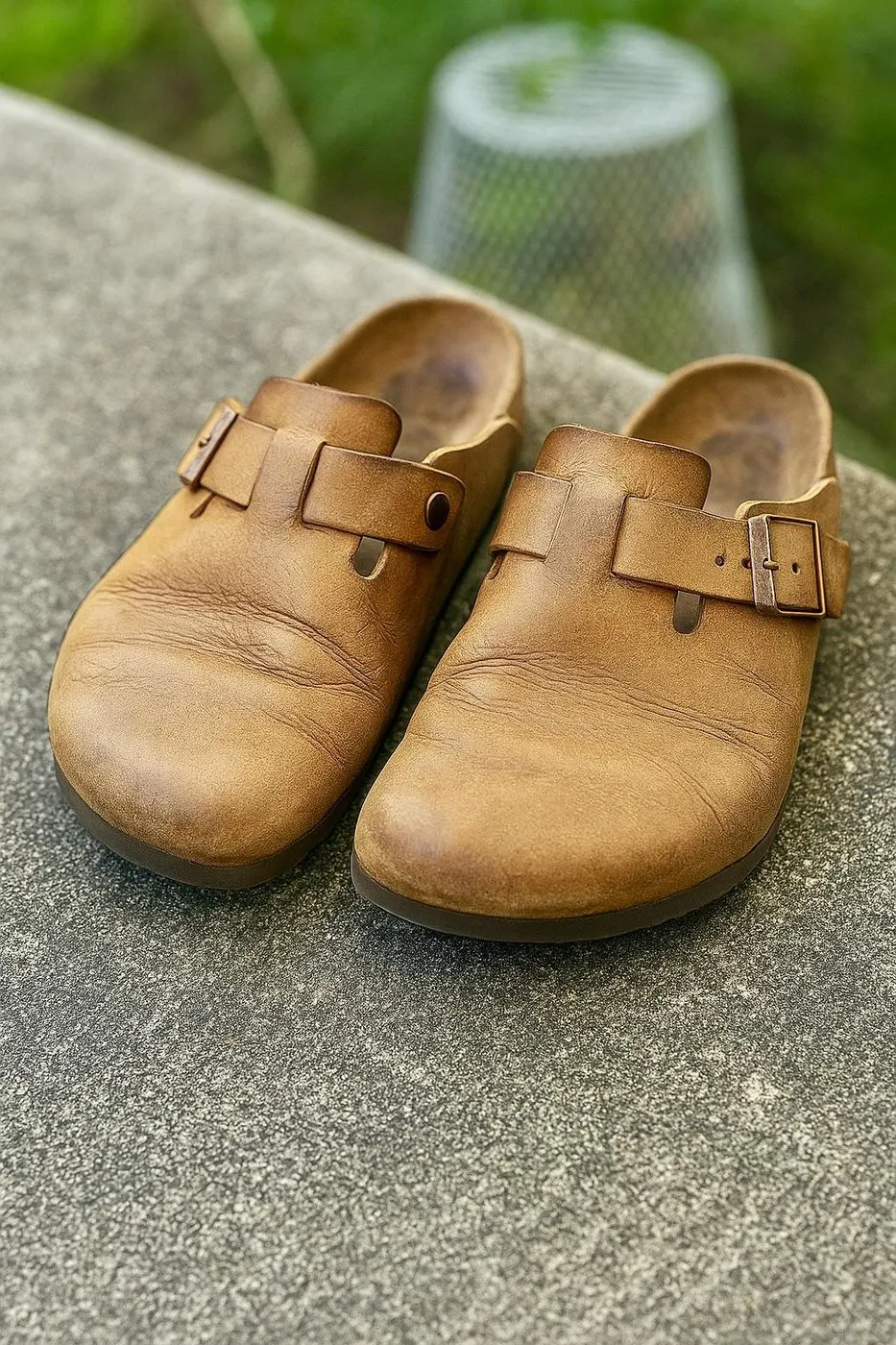
A brown Boston with pale jeans leaves a whole block of colour under the hem. User nicky861 posted a side view of that combination on 18 October 2025.
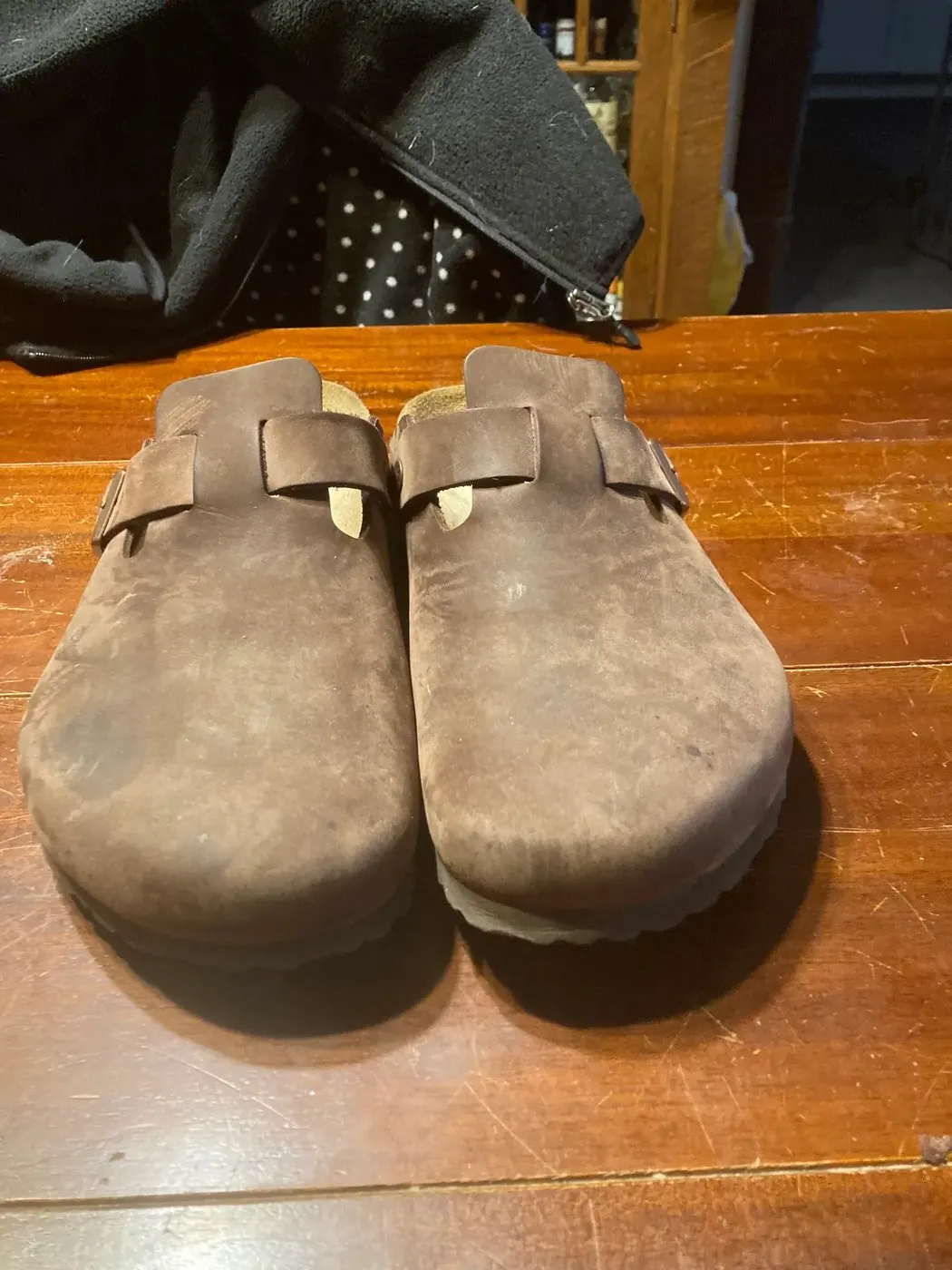
With oiled leather, creases and colour changes become part of the look. Patina Project user sigben59 recorded his Habana pair in April 2024, at about three months for the upper and about four months for the insole. Another Reddit user showed a Tobacco pair after two years of daily wear on 1 September 2025.
How do you size the Boston, and what is the difference between Regular and Narrow?
Measure your foot, use the US site's size chart and fitting guide to choose an EU size, then choose the width separately: Regular for medium to wide feet, Narrow for narrow to medium. A hollow footprint on the box and insole means Regular, a solid one means Narrow. Do not add length to replace width, and do not fix a too-long shoe by tightening the strap.
Width A
Width B

On the US conversion chart, women's US 7–7.5 is EU 38 and US 9–9.5 is EU 40. Check whether the page shows men's or women's US sizing before reading the EU number, and do not compare the same digit across systems.
The US site maps Regular to roughly C–D in women's and D–EE in men's; Narrow to roughly A–B in women's and B–C in men's, and says Narrow suits most women's feet. Your own width and the actual fit still decide, not the men's or women's label.
Community advice on sizing up is not consistent. Some find their usual size right and the next size sloppy; long-time wearers warn against explaining every discomfort as unfinished break-in. The right size is usually the one that puts the foot in the right place now, without relying on imagined future softening. The soft footbed adds foam and the brand notes it can feel tight before adapting, so if you plan to wear thick socks, fit it that way.
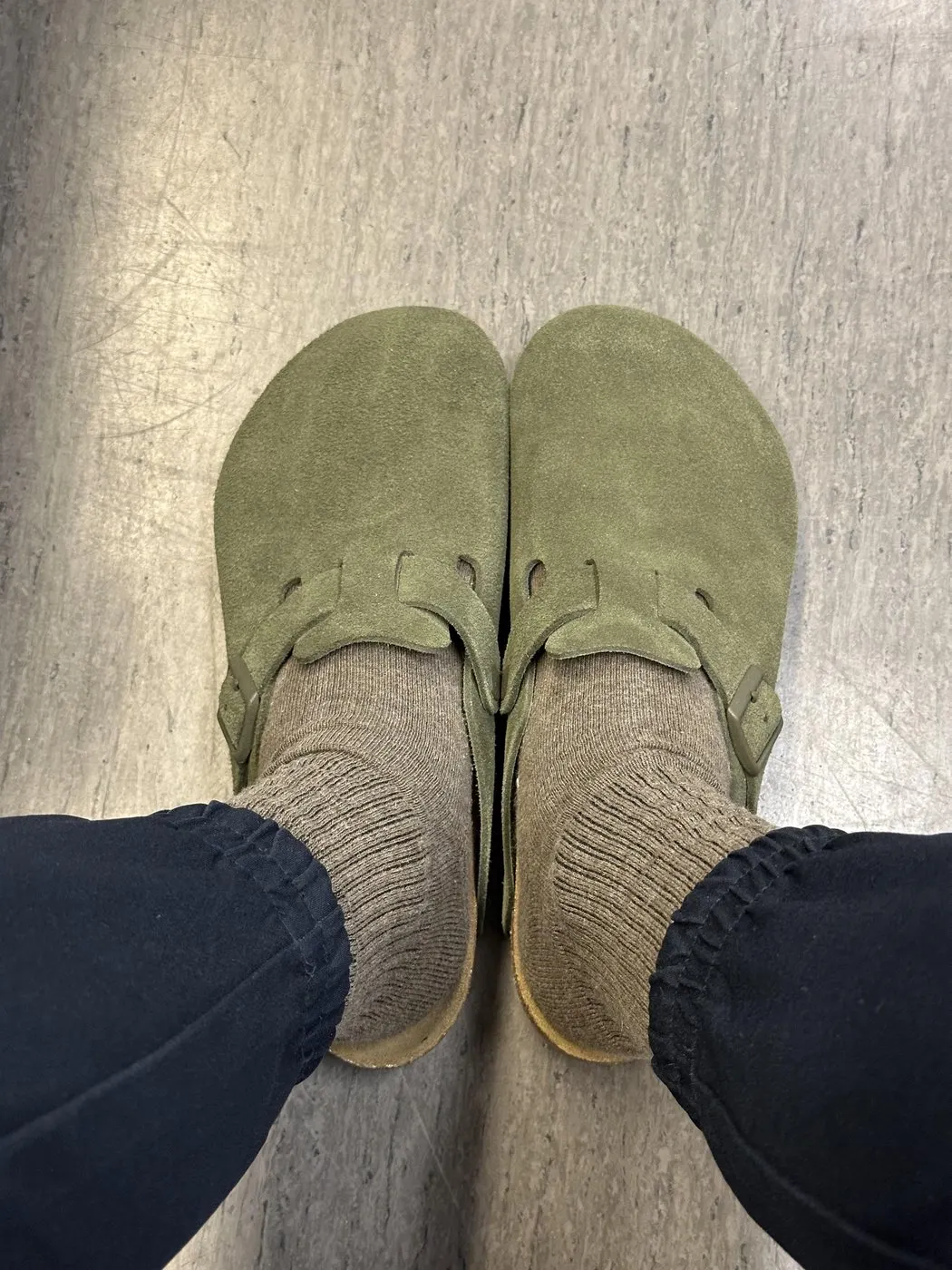
Socks take up space inside. On 22 September 2025 a reader posted a top-down photo of green suede Bostons with socks, where the collar, instep and toes can be judged together.
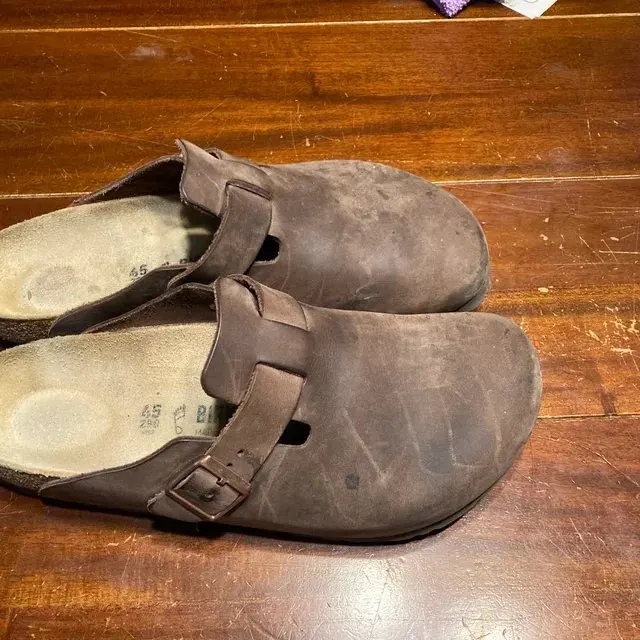
The insole of sigben59's Habana pair after about four months still shows EU 45, the length mark 290 and the footprint. Rather than remembering a number, check in the fitting whether the foot sits inside the footbed outline and whether the edge presses the toes or the side of the foot.
Read the footbed, width and upper together; that makes the wrong version easier to avoid.
Choice A
Choice B
| Choice | Common difference | Effect on buying |
|---|---|---|
| Classic footbed | Cork-latex construction, usually firmer at first, often a black logo | Suits someone who accepts gradual adaptation; support is obvious from the start |
| Soft footbed | Same contours with a latex foam layer under the lining, often a blue logo | Usually easier to adapt to, but can feel slightly tight and hold more heat |
| Regular / medium-wide | For medium to wide feet | With a wide foot or broad forefoot, check width instead of adding length |
| Narrow / narrow-medium | The brand says it suits most women's foot shapes | With a narrow foot, check it; tightening the strap cannot replace the right width |
| Suede upper | Softer, absorbs moisture, stability varies by hide | More likely to collapse and need opening by hand before putting it on |
| Oiled-leather upper | Holds more shape, changes colour and develops a patina | Usually stands up more than suede, but does not guarantee freedom from rubbing |
Can you wear the Boston with socks, and how do white socks work?
Yes. White socks put a pale band between the hem and the collar, and people wear them with jeans and work trousers. Bring the socks you plan to wear, especially thick ones, so the instep and forefoot room can be judged together.
On 12 October 2026 creator itsangelguardian paired pale Bostons with white socks and a pale blue top, calling them a favourite everyday shoe.

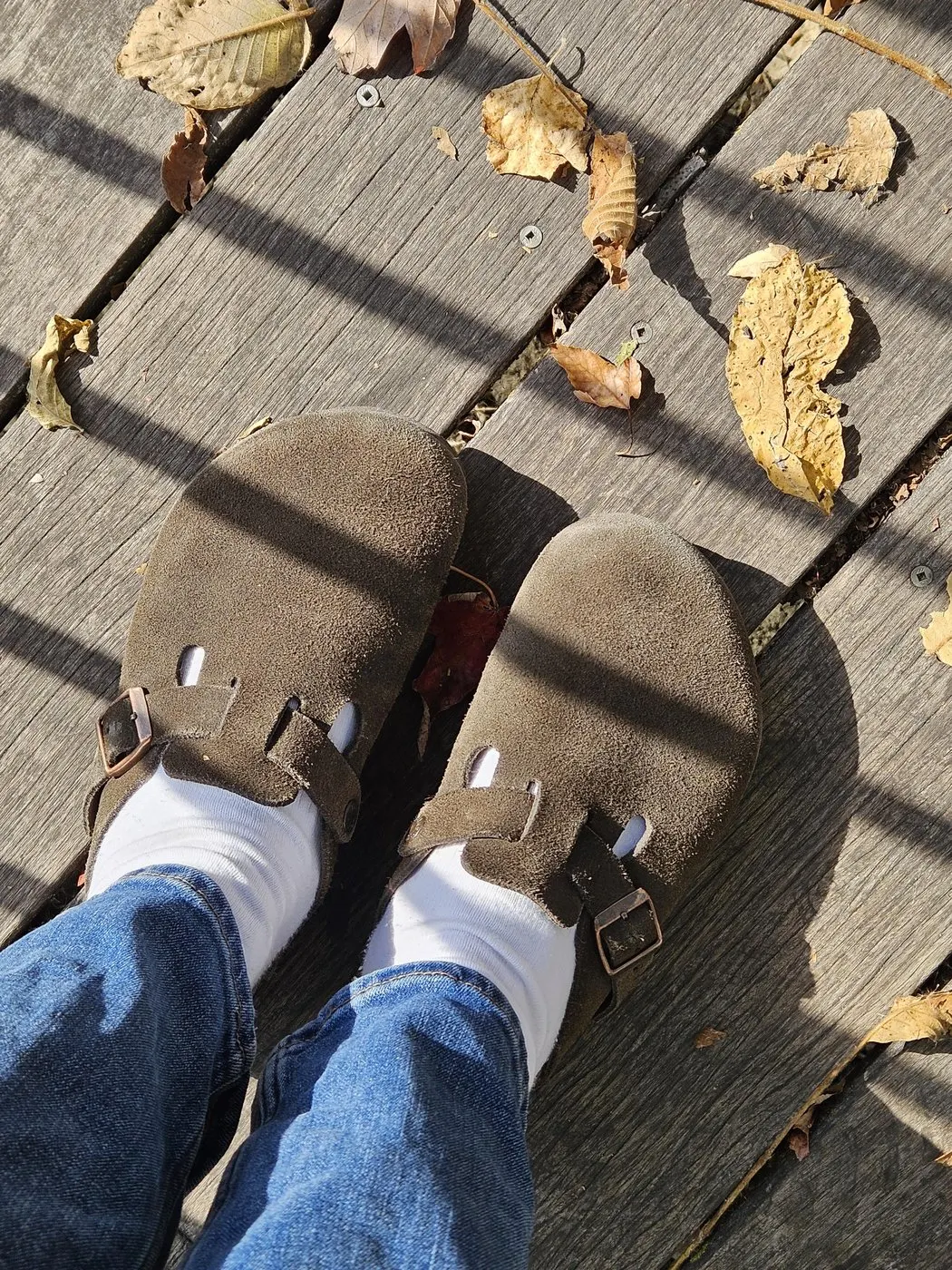
White socks turn up in ordinary outdoor outfits too. On 24 October 2025 Deathclawreaper93 photographed jeans, white socks and dark Bostons on a boardwalk covered with leaves.
How do Bostons work with jeans, and which street photos help?
Beige Bostons go with dark jeans and a bright cardigan; brown carries a full denim outfit; a white T-shirt and jeans is simpler still. Street photos of Kendall Jenner, Kristen Stewart and Jennifer Aniston each show one combination.
In February 2022 The Zoe Report collected Boston street photos including Kendall Jenner and Kristen Stewart. British Vogue covered Kendall's Los Angeles outfit on 7 February 2022, photographed on 5 February, in beige Bostons.

Kristen Stewart wore brown Bostons with a denim jacket and jeans, leaving the brown upper at the bottom of an all-denim outfit. The photo appears in The Zoe Report's February 2022 collection.

On 3 April 2026 Woman & Home wrote about Jennifer Aniston wearing Bostons with jeans, in a photo taken on 29 April 2025. In October 2026 German Vogue also published a look back at the Boston's 50 years.

Beyond jeans, which trousers work with the Boston?
Grey or white joggers and beige trousers all work. Echo the shoe colour in the clothes, or use a dark shoe to anchor a pale trouser. Kaia Gerber's joggers and Dakota Johnson's beige trousers are two different references.
In The Zoe Report's February 2022 collection, Kaia Gerber wore a striped shirt, grey joggers and dark Bostons, and Dakota Johnson wore black Bostons with beige trousers. On 24 September 2023 Kaia was photographed in Los Angeles walking a dog in grey Bostons and white joggers, reported by US Vogue.


The same collection includes Dakota Johnson in black Bostons with beige trousers.

Sweatpants are more relaxed; pale trousers make a dark upper stand out. Pick the trousers you already wear instead of buying a street photo item by item.
Can the Boston handle rain or washing, and how do you care for the upper and footbed?
The standard cork-footbed Boston is not waterproof and should not be soaked or washed. Let a wet pair dry at room temperature, away from radiators, direct sun and a hot car. Brush suede with a proper brush; dust and lightly treat oiled leather according to its care notes. Air the footbed, and reseal the cork edge if it looks dry.
The brand's US care page warns that too much water can damage the cork seal and the bonding, and that concentrated heat harms cork and EVA. The brand's water-friendly one-piece EVA pairs are a separate line; their washing method does not belong on a standard Boston.
Treat each upper by material. The US care page suggests using a suede brush to lift dust and restore the nap, with a regular water-and-dirt repellent spray. The UK material notes say to dust oiled leather with a non-woven cloth, use little oil or wax, and sometimes rub small water marks, oil spots or scratches with the palm of the hand. Do not put leather conditioner on the suede footbed.
The suede lining of the footbed absorbs moisture from the foot. The Australian care notes suggest airing the footbed often so odour does not build up in a damp lining. The US page mentions spraying the brand's cleaner on the footbed, wiping away excess water and dirt, then brushing the nap once dry. The exposed cork edge comes with a sealant; if it looks dry, add a thin coat of cork sealer. Cleaning can change how a material looks, as the brand notes. These are care methods, not a lifespan promise.
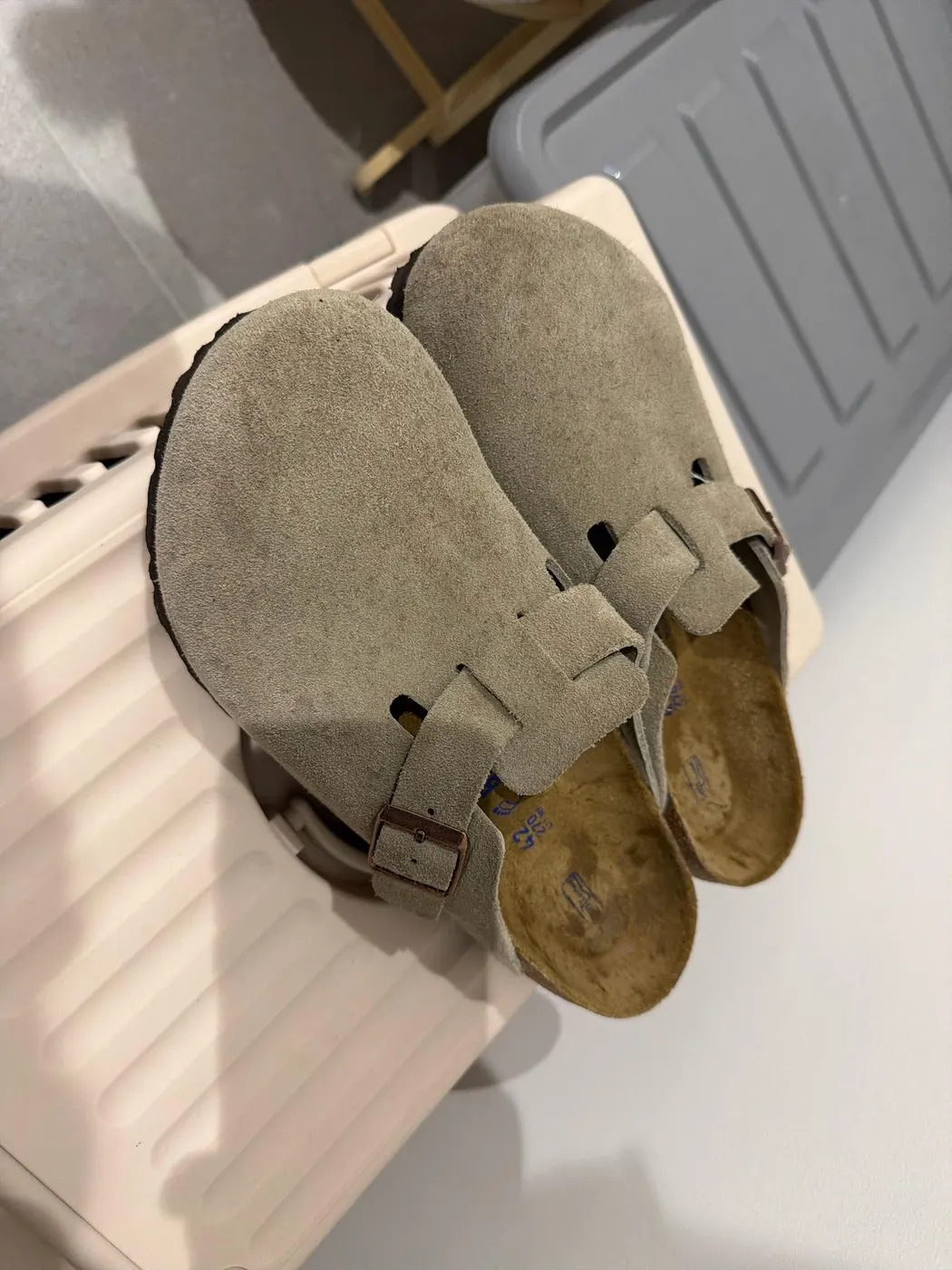
Some pairs meet rain early. User DardyM8 wrote that the Taupe suede pair was two weeks old and had water marks after rain; the blue Soft Footbed logo is visible on the insole.
What does the Boston cost, and how do footbed, upper and colour change the price?
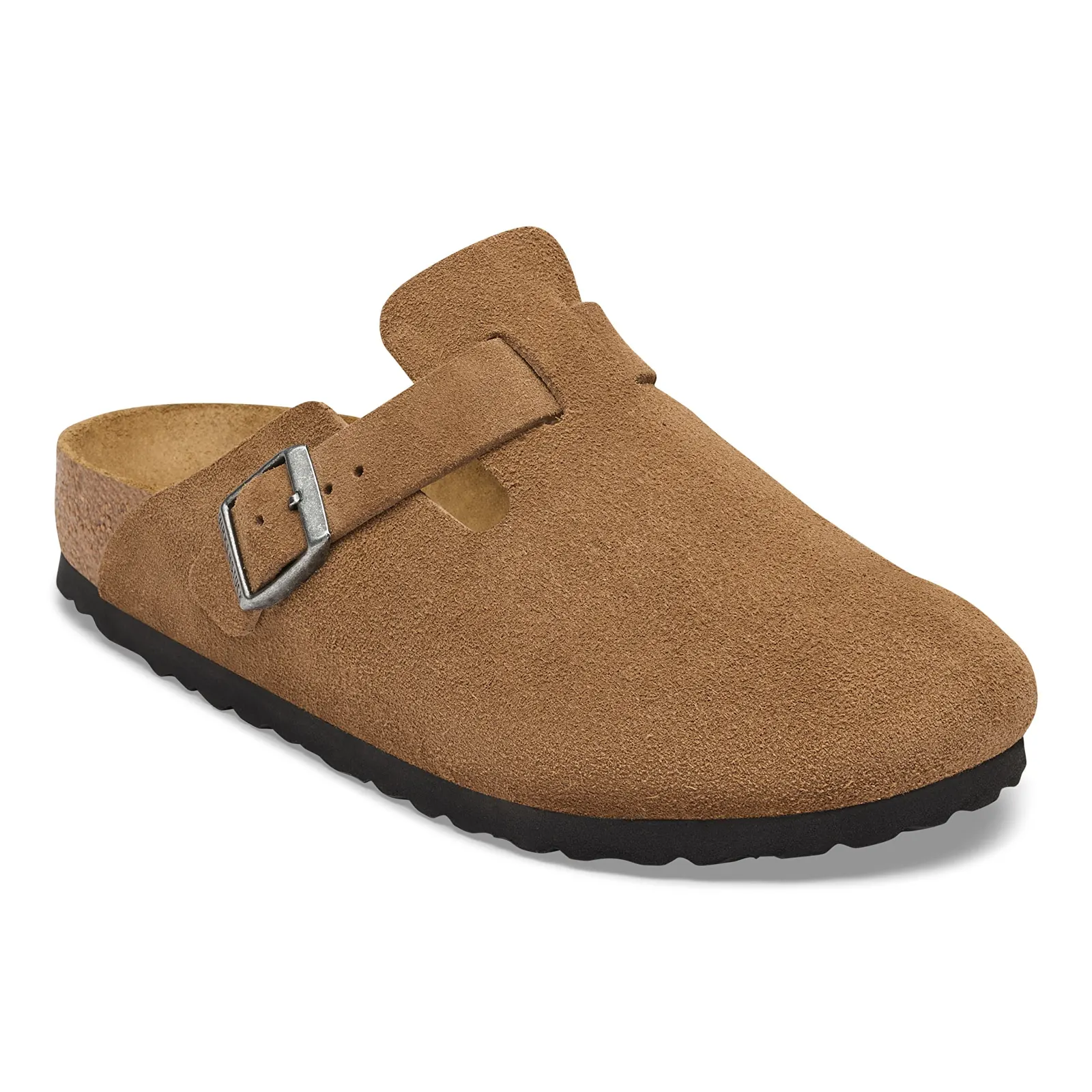
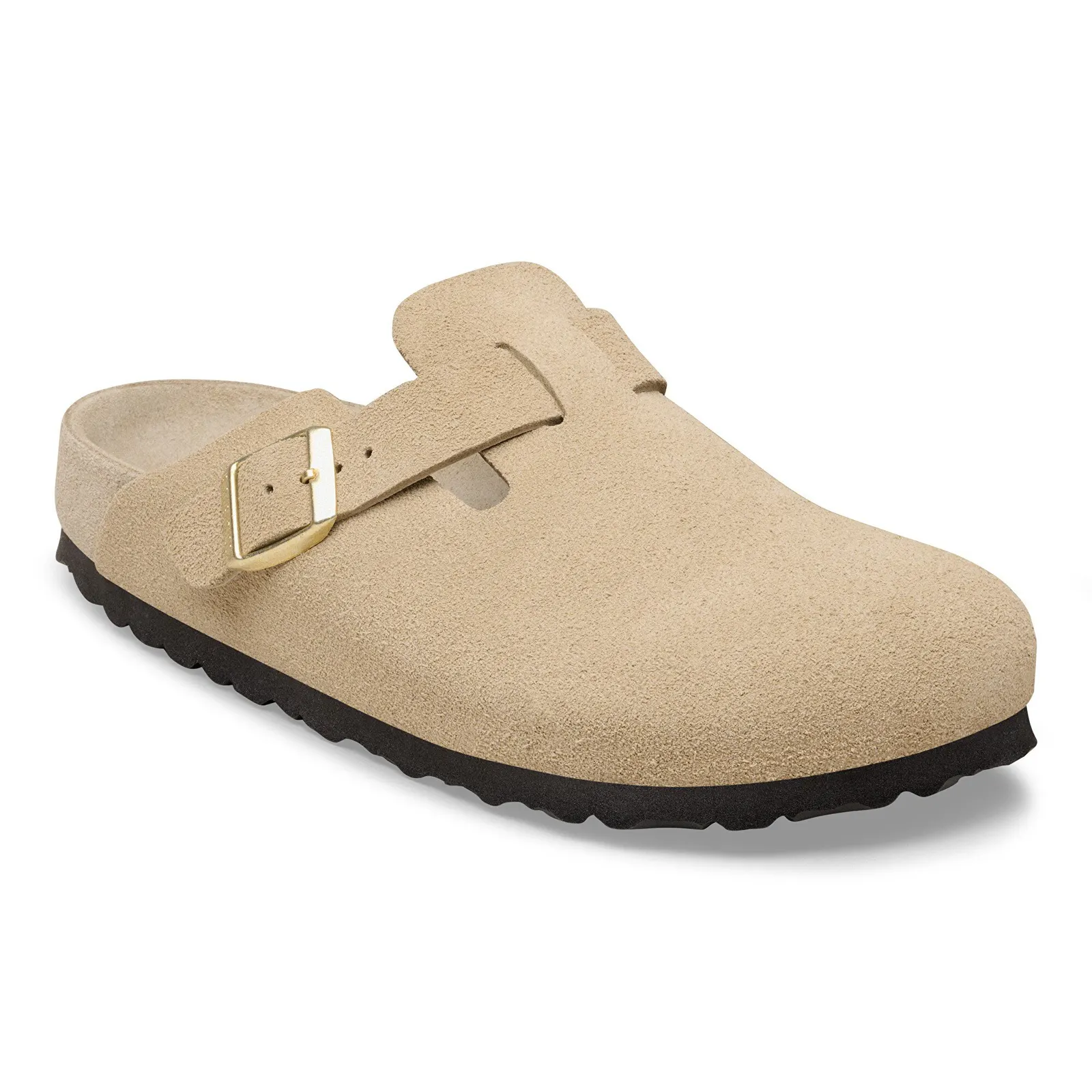
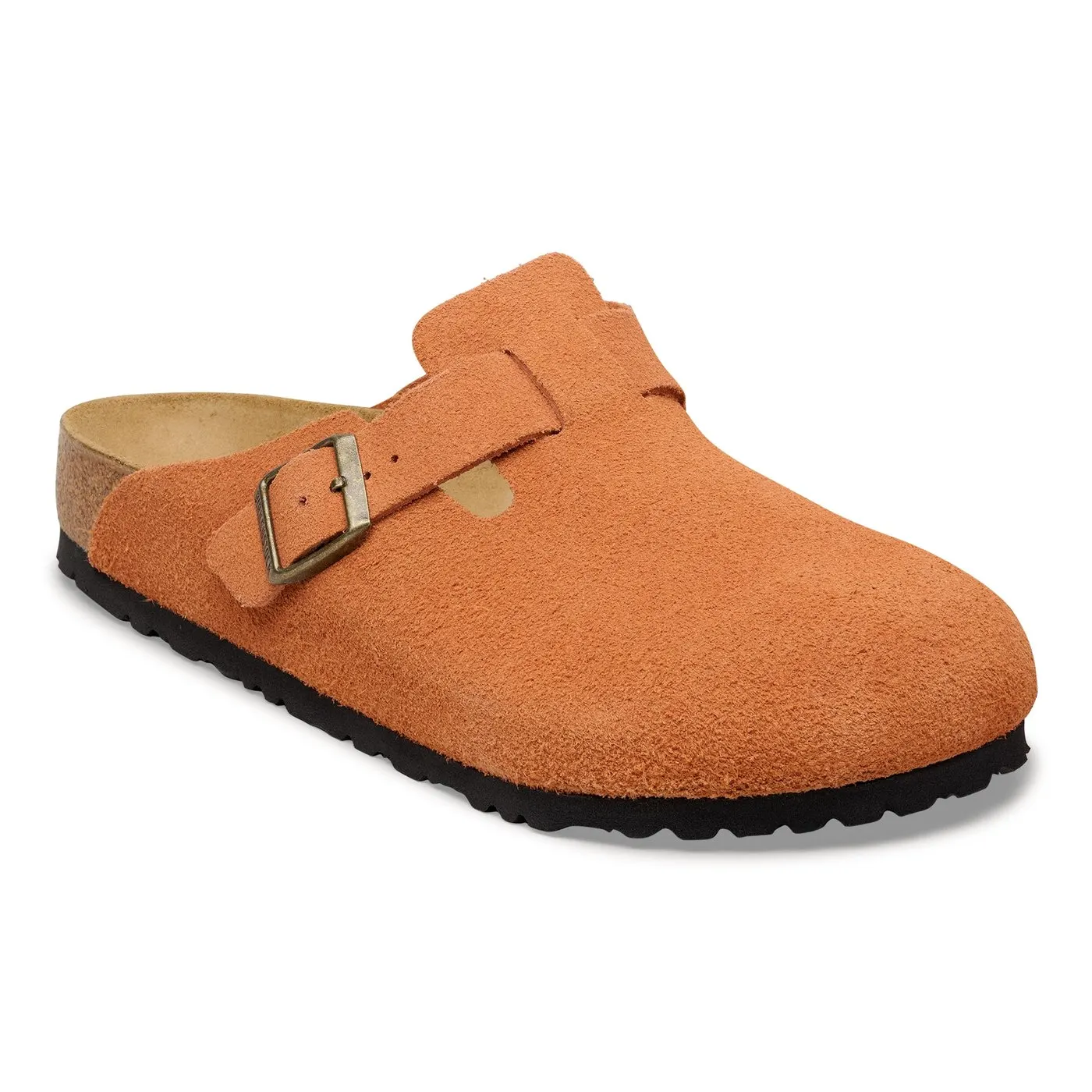
On the US site on 24 November 2026, classic-footbed suede in Dark Tea and oiled leather in Habana were US$154.95, the Taupe suede soft footbed was US$169.95, and the Exquisite fully covered Taupe was US$230. That day Dark Rust suede classic had dropped from US$154.95 to US$100.72, and Elemental Blue oiled leather classic from US$154.95 to US$116.21. A price difference under the same name can come from the version or just one colour's discount, before tax and shipping.
Version A
Version B
The reader's US$98 Elemental Blue was an earlier discount. The US prices above are a historical reference from 24 November 2026; check price and stock again at checkout.
Price A
Price B
Check three things before buying: the upper material, classic or soft footbed, and Regular or Narrow. Then choose the EU size. Start from official pages such as the Taupe suede soft footbed, the Habana oiled-leather classic and the discounted Dark Rust suede classic. On another platform, verify the materials, footbed, width and seller, not the name Boston alone.
Colour B
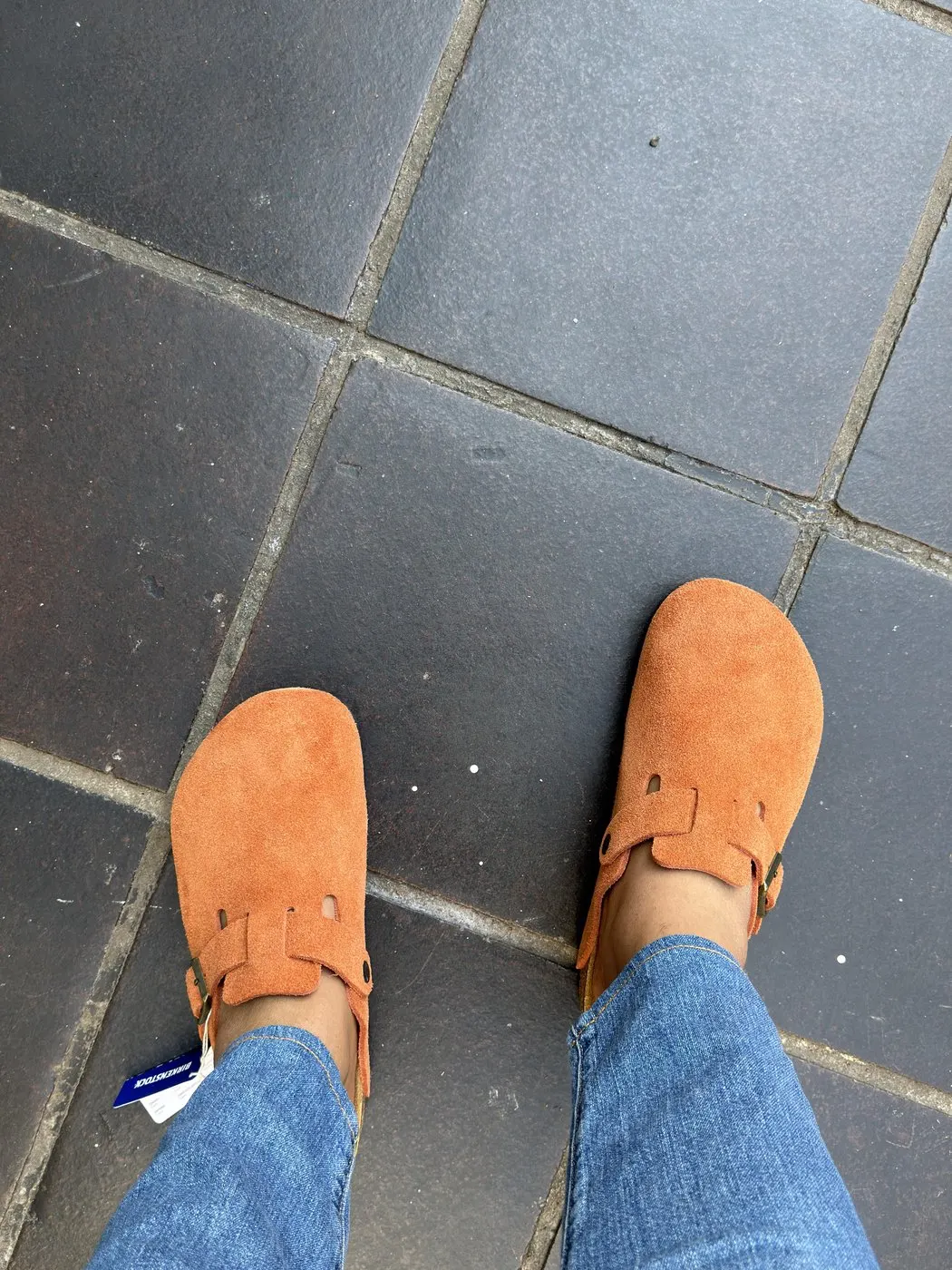
On 16 August 2026 user Specific-Pianist7595 posted Dark Rust suede Bostons with jeans, with a tag still on one shoe.
Is the Boston a daily shoe, and who should choose something else?
The Boston belongs in a daily rotation if you like the closed-toe clog, will choose the footbed and width for your foot, and accept the open heel. If you need a trainer-like locked heel, a soft first step, or continuous fast walking on hard ground, test those needs before the look.
If you want a soft first step and a heel held like a trainer's, a classic-footbed Boston may not provide it. If the heel slips and you do not want to open the upper by hand each time, try oiled leather or compare both uppers in a shop. For long days on hard pavement, or frequent walking in water and heavy rain, count the limits in: one owner still did not find them comfortable enough after two summers, and the standard pair is not waterproof.
Back to choice A
Back to choice B
Decide three smaller things first: whether you want the extra foam, whether you accept suede's softness and collapse, and whether the length and width each fit. Once those are clear, choose the colour and the price of the day.